
Our Mission
Caregivers are often the invisible part of a medical diagnosis. The Caregiver Education Center exists to change that.
We help caregivers feel seen, understood, and supported through honest conversations, practical education, and lived experience. We hope to influence how caregivers see themselves, how healthcare professionals include and support caregivers, how support groups welcome spouses and partners, and how the caregiving journey is understood by everyone it touches.
Our Vision
We envision a future where no caregiver feels invisible, every spouse or partner is recognized as an essential part of the care team, healthcare professionals understand the emotional journey of caregiving, and honest conversations replace silence about the realities of serious illness.
Our Promise
We talk about what never gets discussed.
If you've recently learned that your partner has prostate cancer, you may be feeling overwhelmed, frightened, and unsure where to begin.
You may have questions you never expected to ask, decisions that suddenly feel urgent, and emotions that seem to change from one hour to the next. Most partners and spouses want to help, but they don't know where to start.
You are not alone.
The Caregiver Education Center is a trusted place where partners and caregivers can find practical guidance, reliable resources, educational articles, printable tools, and compassionate support throughout the prostate cancer journey.
Whether you're looking for practical caregiver tools, trusted resources, educational articles, or simply reassurance that someone understands what you're experiencing, you'll find resources here designed specifically for partners and caregivers.
Take a deep breath. Start wherever feels right. You don't have to learn everything today.
You just need a place to begin.
🌻 Start Here
Wherever you are in the prostate cancer journey, start with the resource that best fits your needs today.
📘 The Newly Diagnosed Caregiver Guide
Your First 30 Days After a Prostate Cancer Diagnosis
Hearing the words, "You have prostate cancer," changes life instantly. While much of the attention naturally focuses on the patient, partners, spouses, family members, and close friends often find themselves wondering, "What do I do now?"
This free guide was created for you.
The Newly Diagnosed Caregiver Guide is a practical companion designed to help caregivers navigate the first month after a prostate cancer diagnosis. Rather than overwhelming you with medical information, it focuses on the questions, decisions, and emotions that arise during those critical first weeks.
Inside, you'll find compassionate guidance, practical advice, and real-world suggestions to help you feel more prepared and less alone. Topics include:
What to expect during the first few days after diagnosis.
Questions to ask your healthcare team.
Creating a caregiver binder to stay organized.
Preparing for surgery, radiation therapy, and hormone therapy (ADT).
Caring for yourself while caring for someone you love.
Understanding the emotional impact of caregiving.
Gentle stories from other caregivers who have walked this path.
Encouragement and practical tools to help you move forward one step at a time.
Whether you're a spouse, partner, adult child, family member, or close friend, this guide was written to remind you that you don't have to have all the answers today. You only need to know what comes next.
My hope is that these pages will help you feel calmer, more confident, and better prepared for the journey ahead. Most of all, I hope they remind you that while every caregiving experience is unique, you are not walking this road alone.
Download your complimentary copy below and take the first step with confidence.
💜 Featured Conversation: Unacknowledged Losses
Some losses never appear in a medical record. In this personal essay, I write about what prostate cancer treatment changed in my husband, our marriage, and the future I thought we would share, including a loss I did not fully understand until I was living it.
Continue the Conversation
Sunday Caregiver Coffee & Conversation is a private Facebook group for partners and caregivers. New questions are posted on the first and third Sundays, with time to respond throughout Sunday and Monday.
💜 Featured Conversation:
When Someone You Love Makes a Medical Decision You Disagree With
You can see the risk clearly. The person you love sees the decision differently. I write about what happened when Nasser and I faced a difficult choice during his prostate cancer diagnosis, and about the pain of watching someone I loved turn away from care. How do you speak honestly when you cannot make the decision for them?
🧰 I Need Practical Tools Right Now
Sometimes you don't need another article. You need something you can use today.
The Partner & Caregiver Tools Library includes printable worksheets, planning tools, appointment organizers, home preparation checklists, and practical resources designed specifically for partners and spouses.
You don't need to use everything. Start with the one tool that meets today's need.
💸 I'm Worried About the Financial Impact of Caregiving
Caregiving affects more than your time and emotions. It can also affect your job, retirement savings, taxes, and monthly budget.
The Financial & Workplace Resources for Caregivers brings together trusted information about tax benefits, workplace rights, financial assistance programs, Medicare, Social Security, budgeting tools, and other resources designed to help you navigate the financial side of caregiving.
🌿 Hormone Therapy (ADT) Resource Center
Hormone therapy (ADT) can affect mood, energy, memory, relationships, intimacy, and emotional connection in ways that often surprise both patients and their partners. This Resource Center brings together articles, practical tools, and caregiver guidance to help you understand what you're seeing, prepare for what may come next, and feel more confident supporting the person you love.
🌿Featured Resource
Begin with our most-read article for partners and spouses:
💬 Lupron Mood Swings and Emotional Changes During ADT
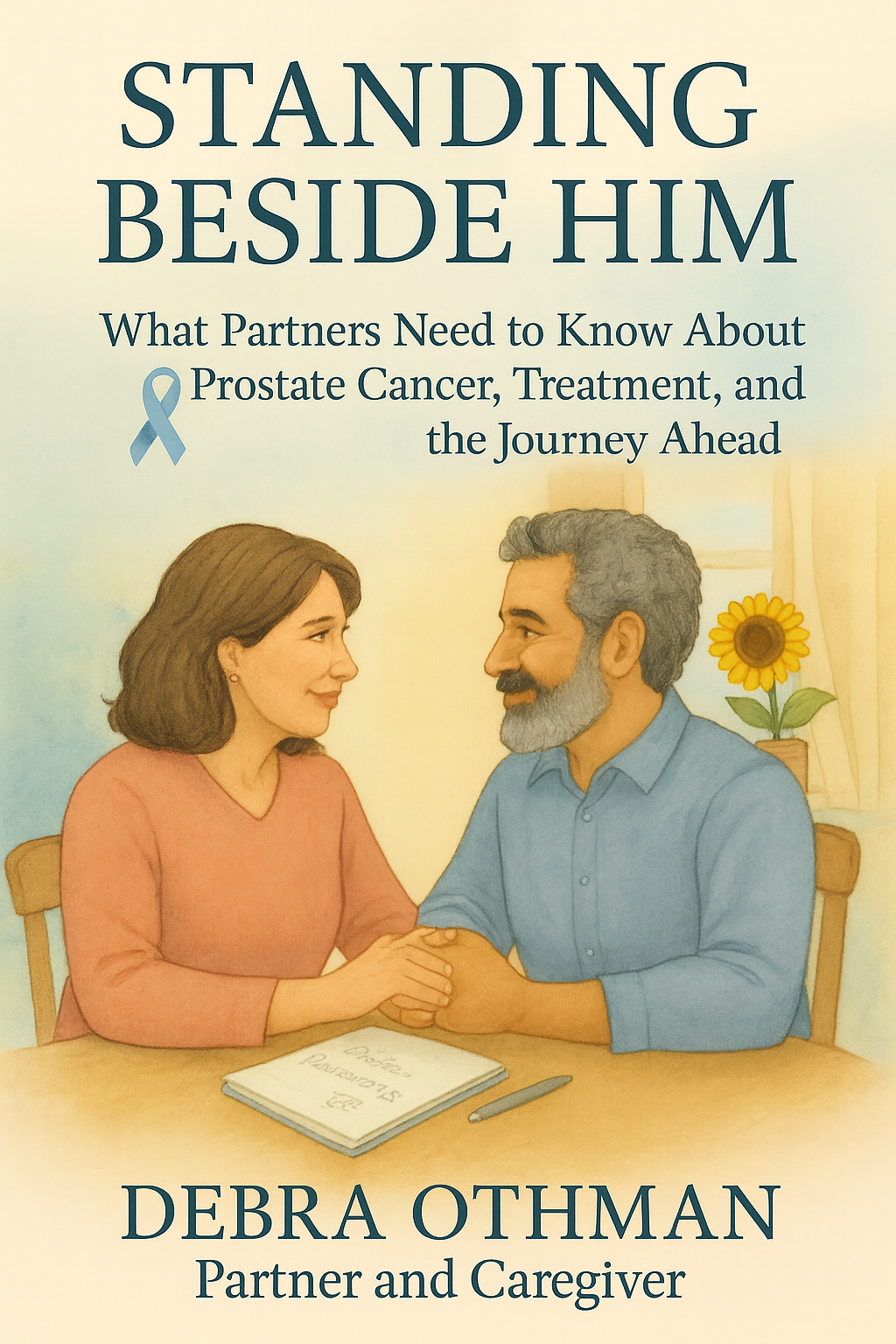
A prostate cancer diagnosis can leave partners and spouses trying to understand treatments, relationship changes, decisions, and everything that suddenly feels uncertain. Standing Beside Him was written to help caregivers feel more prepared, more informed, and less alone as they move through the road ahead together.
📘 I want to understand the journey ahead
🎤 Looking for a Speaker?
I offer virtual presentations for prostate cancer support groups, caregiver groups, and organizations serving partners and spouses.

🌻 A Final Word
Whatever brought you here today, I’m so glad you came.
Caregiving can feel invisible — but I promise: you’re not.
Take what you need, and know you have a place here. Always.
