💜 It Was His Cancer. It Changed Both of Our Lives.
For a long time, I thought prostate cancer was something happening to my husband. It took me nearly two years to understand that it was changing both of our lives.
Nasser and I handle stress very differently. When life becomes overwhelming, he sleeps. I do the opposite. During those months after his diagnosis, I often found myself awake long after he had fallen asleep. While the house was quiet and the rest of the world seemed to be resting, I sat with my laptop searching for answers.
I read medical articles, patient forums, caregiver groups, treatment studies, and personal stories. Looking back, I think I was also trying to find my tribe.
After a while, I began to recognize patterns. I could often tell where someone was in the journey simply by the questions they were asking. The newly diagnosed spouses wanted certainty. People in treatment wanted reassurance. Those dealing with recurrence were searching for hope. Although the details were different, many of us were wrestling with the same fears. We wanted to know whether treatment would work, whether our relationships would survive the changes ahead, and whether life would ever feel normal again.
What I discovered was a vast room filled with people doing exactly what I was doing. They were searching, trying to understand, and trying to feel less alone. Some nights the information helped. Other nights it terrified me. One answer often led to three more questions. What I did not understand at the time was that I was not really searching for information at all. Beneath all of that reading and researching, I was searching for reassurance.
When my husband was diagnosed, everyone naturally focused on him. His appointments, treatments, side effects, and fears became the center of attention. And of course they should have. He was the patient.
What I didn't understand at the beginning was that while he was going through cancer, I was going through something too. The diagnosis belonged to him, but the experience belonged to both of us.
Like many spouses, I slipped into caregiver mode almost immediately. I organized appointments, researched doctors, kept track of information, and tried to stay strong when both of us were frightened. At first, I thought the hardest part would be hearing the diagnosis. Looking back, I realize the harder part was watching our life slowly change in ways neither of us expected.
Cancer entered our marriage quietly at first, but before long it seemed to be everywhere. Conversations changed. Plans changed. Priorities changed. Even ordinary days felt different. We were no longer simply husband and wife moving through life together. We had become patient and caregiver too.
As time went on, I realized I was grieving things I could not easily explain to other people. I missed our old ease with each other. I missed our independence. I missed the confidence that tomorrow would probably look a lot like today. Most of all, I missed parts of the man I had always known.
Treatment, especially ADT, brought changes that neither of us fully understood at the time. The physical side effects were difficult enough, but the emotional changes caught me off guard. There were periods of anger, withdrawal, exhaustion, and distance that felt unlike the husband I knew. At times I felt as though I was living beside someone who looked familiar but emotionally felt far away. Nobody had prepared me for that part. Nobody told me that caregiving could feel lonely while the person you love is still sitting right beside you.
What made the experience even more complicated was that I had already lost a husband years earlier.
I knew what devastating loss felt like. I knew what it meant to watch a future disappear. I knew what it felt like to rebuild a life after grief.
When I met Nasser, I never imagined I would find myself facing another serious illness. We had built a life together. We were supposed to be enjoying this season of our lives, not sitting in doctor's offices discussing cancer, treatment decisions, and side effects.
That previous loss changed the way I experienced prostate cancer. Every test result carried a little more weight. Every setback felt a little more frightening. Every conversation about treatment stirred memories I thought had been put away years earlier.
Waiting for test results, hearing difficult conversations, and watching treatment affect the person I loved stirred memories and fears I thought I had left behind. Part of my fear was about what might happen to Nasser. Another part came from remembering what had already happened in my own life.
At times I experienced overwhelming anxiety, flashbacks, anticipatory grief, and the deep fear of facing another profound loss. I was caring for my husband in the present while carrying memories of the man I had already lost. That is something very difficult to explain unless you have lived it.
Looking back, I realize that cancer gradually changed more than our schedules and priorities. It changed the way we lived.
Nasser and I isolated ourselves, although at the time I don't think either of us fully realized we were doing it. Living in a rural area made it easy. We stopped seeing people. I stopped visiting friends. I stopped inviting people to our home. One month turned into another, and before I knew it, nearly two years had passed.
The truth is that somewhere along the way, I lost myself.
Part of it was fear. Part of it was exhaustion. Part of it was the feeling that every ounce of energy needed to be directed toward helping my husband get through treatment and whatever came next.
At the same time, I was carrying other losses in my life. I had already experienced profound grief. I had lost my children and my sister, and I found myself doing something I suspect many caregivers do when they are frightened. Not in any logical way, and not usually in words I said out loud. But underneath the research, the appointments, the worry, and the effort to stay positive was a quiet plea that never seemed very far away.
Having already lost so much, I found myself asking God for just one thing.
Please don't take my husband too.
That fear followed me for a long time.
What finally began pulling me out of that dark place was something I never expected.
It was writing this book.
At first, I was simply trying to gather information and organize resources. But as the project grew, it gave me something beyond the next appointment and the next test result. It connected me with other caregivers. It reminded me that our story might help someone else.
Little by little, writing became a way back to myself.
The depression that had settled over both of us did not disappear overnight, but the book gave me something to reach toward. It gave me a reason to look ahead instead of focusing only on what I was afraid of losing.
One experience stands out in my memory more than almost anything else. My husband and I traveled nearly 200 miles from home so he could receive six radiation treatments along with ADT. The treatment itself lasted only about a week, but by then our lives had been revolving around prostate cancer for months. We had spent countless hours researching, making decisions, attending appointments, discussing treatment options, and wondering what the future might hold.
When treatment was finally over and we returned home, I expected both of us to feel relieved. Instead, we were exhausted. Not the kind of tired that comes from a poor night's sleep. This felt much deeper than that.
The day after we got home, both of us settled into our recliners. I do not remember which one of us mentioned it first, but we were both thirsty. The kitchen wasn't far away, and there was nothing physically preventing either of us from getting up. Yet the simple act of walking into the kitchen and getting a glass of water felt like too much effort.
I remember sitting there thinking about lemons because my mouth felt so dry. Somehow imagining a lemon seemed easier than getting up and walking into the kitchen for a glass of water.
At the time it seemed almost ridiculous, but looking back I think it says a great deal about what we had been carrying. The radiation treatments lasted only a week. The fear, uncertainty, responsibility, and emotional strain had been building for months. We had been moving from one appointment to the next and from one decision to the next without really stopping to absorb what was happening.
For days after we returned home, both of us mostly slept. We drifted off in our chairs, fell asleep during afternoon movies, and found ordinary tasks such as doing laundry surprisingly difficult. At first I assumed it was simply the physical effects of treatment. As the days passed, however, I began to realize that something else was happening.
We had spent months holding our breath emotionally. Once treatment was complete and there was nothing immediate to do, all of the fear and tension we had been carrying seemed to catch up with us at once. Looking back, I believe we were experiencing anticipatory grief. We had spent so much time preparing ourselves for what might happen that we had not fully recognized the emotional weight we were carrying. When the immediate crisis eased, our minds and bodies finally had room to acknowledge it.
That week taught me something important. Caregivers and patients do not simply carry the burden of treatment itself. They also carry months of fear, uncertainty, responsibility, and emotional strain. Sometimes we do not feel the full weight of it until we finally stop moving.
As time went on, I began searching for resources that spoke directly to spouses and caregivers. There were excellent medical resources. There were treatment guides. There were patient support groups. But I struggled to find enough honest conversations about what was happening to caregivers themselves.
I wanted someone to tell me that feeling frightened, lonely, exhausted, angry, overwhelmed, and grief-stricken did not make me a bad caregiver. I wanted someone to talk openly about relationship changes, anticipatory grief, intimacy, identity, and emotional survival.
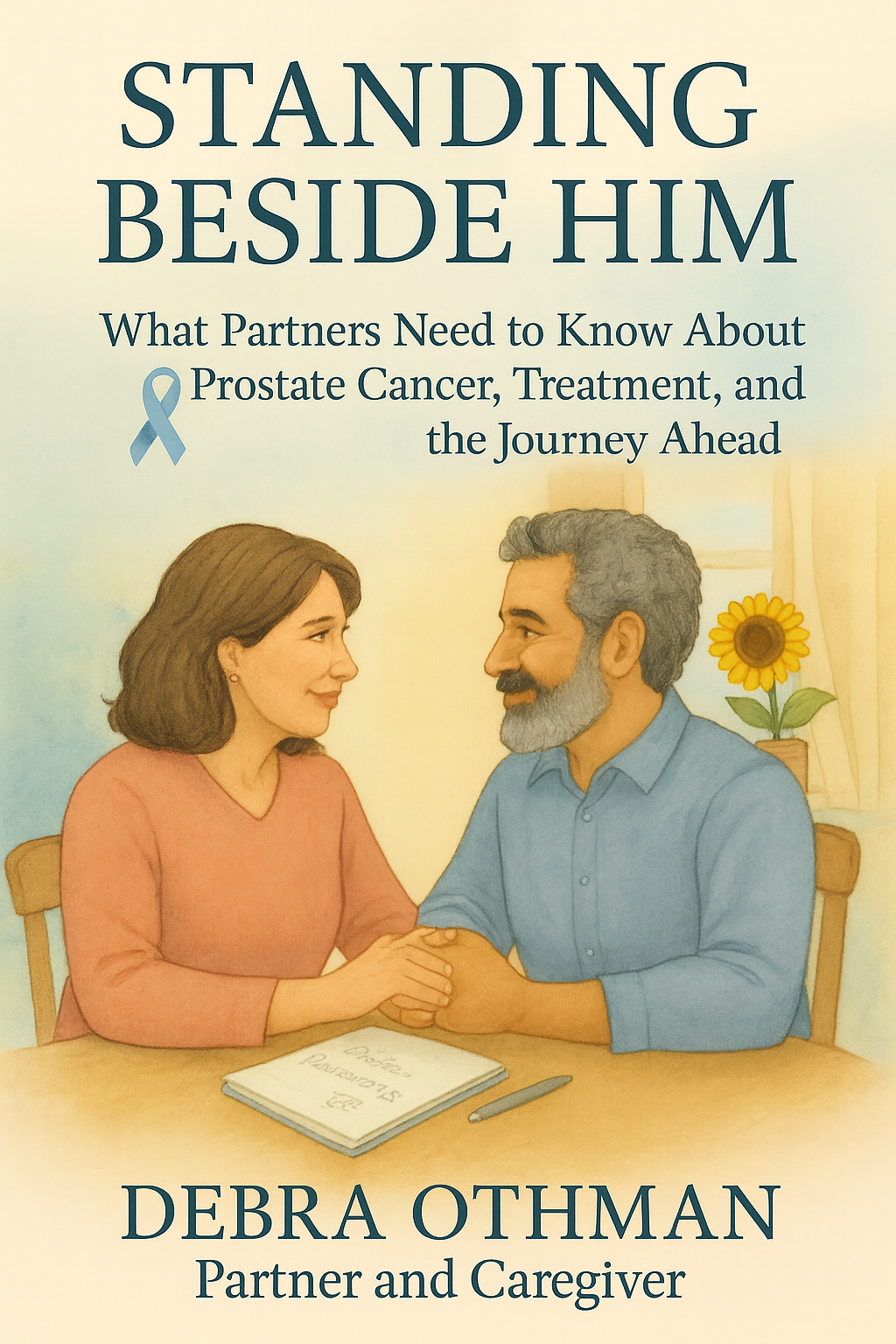
Over time I realized that many other spouses were asking the same questions I was asking. The more stories I read, the more I understood that I was not alone. Eventually, that realization became one of the foundations for Standing Beside Him.
Not because I had all the answers, but because I knew I could not have been the only person feeling this way.
If you have found yourself grieving parts of your old life, feeling lonely beside the person you love, or carrying fears you rarely say out loud, I hope this article helps you feel a little less alone.
Caregiving can be beautiful, meaningful, frustrating, exhausting, and heartbreaking, sometimes all in the same day. Many of the feelings we experience as spouses and caregivers are rarely discussed, yet they are far more common than we realize.
For a long time, I thought many of these struggles belonged only to me. The more caregivers I met, the more I realized how many of us were carrying the same fears, questions, and quiet grief.
If you are walking a similar road, I hope you will give yourself the same grace and compassion you so freely offer the person you love.
About the Author
Debra Othman is the author of Standing Beside Him, a guide for spouses and partners navigating prostate cancer. Drawing from her own caregiving experience, she writes about the emotional realities of caregiving, relationship changes, grief, resilience, and finding your way through difficult seasons of life.
Learn more at debraothman.com.