I Thought I Was Going to Speak
What Listening to Caregivers Taught Me About Love, Loss, and Adaptation
By Debra Othman
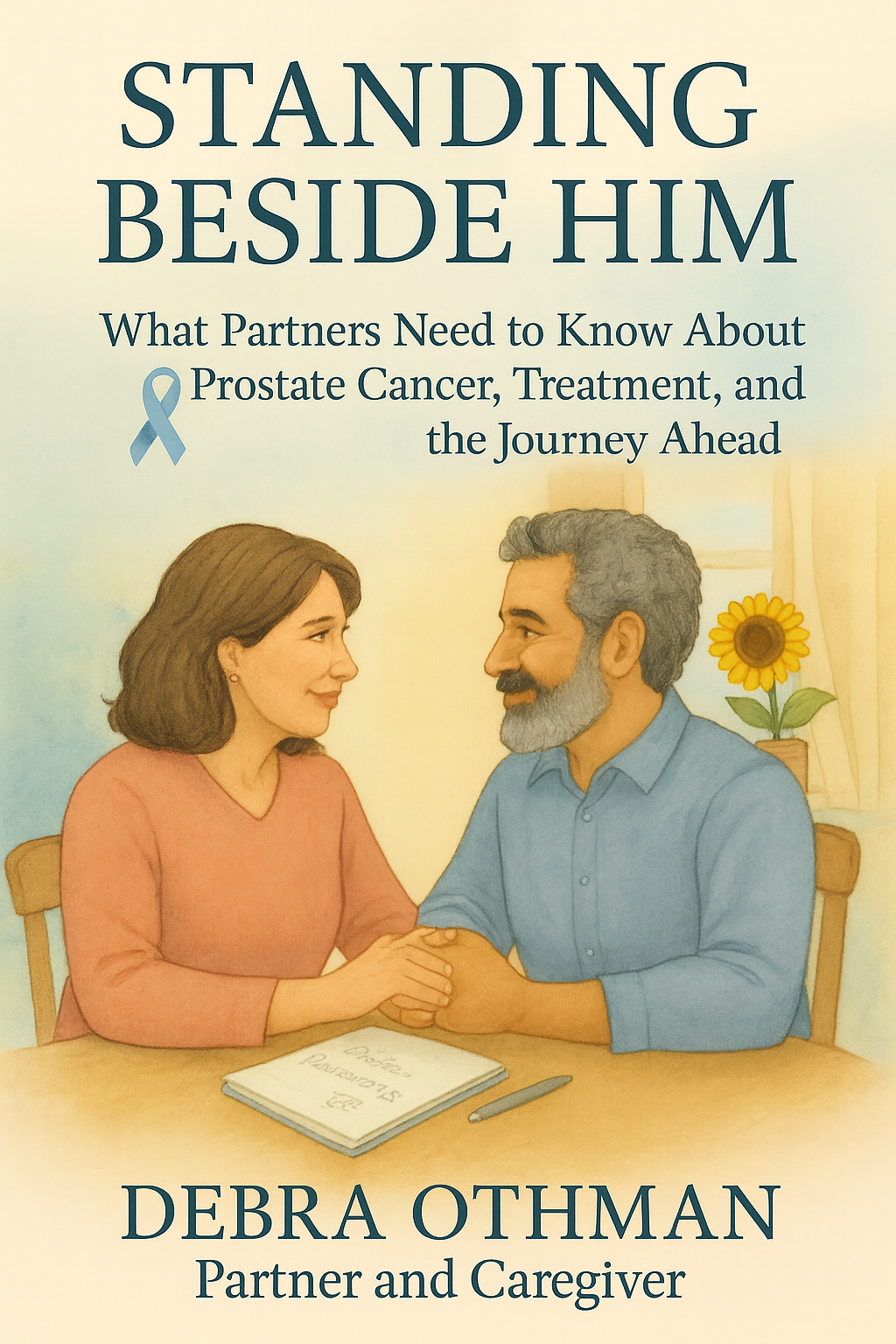
Author of Standing Beside Him
When I accepted my first invitation to speak to a prostate cancer support group, I thought I knew why I was going. I wanted to share our story and hoped that something Nasser and I had learned might make the journey a little easier for another couple.
What I didn't expect happened after the presentation ended.
People didn't rush out the door. They stayed behind. Some had questions. Others wanted to tell me about their husbands or wives, and a few quietly shared things they had never said out loud before. I found myself driving home thinking about those conversations—not because they were dramatic, but because they were so honest.
After a while, I began to notice something. No two stories were alike, but many of the feelings were. Fear. Loneliness. Grief. Frustration. Guilt. And sometimes, relief. Relief that someone had finally heard another person put words to what they had been carrying around for months, or even years.
Those conversations have stayed with me. They've changed the way I think about caregiving, and they've changed the way I think about our own experience. Before I started speaking, I thought I understood this journey because Nasser and I had lived it. Now I realize we lived one story. Listening to other couples has allowed me to glimpse hundreds more.
As I listened, I realized something else. Caregivers and patients were often carrying many of the same fears, but they weren't always sharing them with each other. Both were trying to protect the person they loved. Both were grieving losses they didn't quite know how to describe. Both were adapting to a life neither of them had chosen.
One thought kept coming back to me.
Prostate cancer doesn't just change a body. It changes the environment in which a relationship lives.
I didn't arrive at that understanding while writing Standing Beside Him. I arrived there by listening. Every support group, every conversation, and every story added another piece to a puzzle I didn't even know I was putting together.
As I drive home after each presentation, I often find myself thinking about the conversations that took place after everyone else had left.
Those conversations have changed me. They've added a depth to my life that I never expected, and they've left me in awe of the resilience of the people who have trusted me enough to share their journeys with me.
I thought I was going to speak.
Instead, I was given the privilege of listening.
The Unexpected Gift
When I accepted that first invitation, I thought I had something to offer. I hoped our story might help another couple feel a little less alone. What I never imagined was what those couples would give back to me.
After every support group, I'd drive home thinking about the conversations that had taken place after the presentation was over. Someone would tell me about a difficult season in their marriage. Another person would describe something they had never said out loud before. I'd find myself replaying those conversations long after I got home, not because they were dramatic, but because they were so honest.
With every support group, every conversation, and every email, my understanding grew a little deeper. Not because I was learning more about prostate cancer, but because I was learning more about the people whose lives had been changed by it.
I listened to wives who admitted they cried in the shower because they didn't want their husbands to see them fall apart. I listened to husbands who worried more about what cancer was doing to their wives than what it was doing to themselves. I listened to caregivers who wondered if they were the only ones feeling lonely while sitting in the same room as the person they loved.
What struck me wasn't that their stories were the same. They weren't. It was that so many of the feelings were. Again and again, people trusted me with experiences they had never talked about before. Not because those experiences weren't important, but because they didn't know how to begin the conversation. Sometimes they simply needed someone who would listen without judgment.
Those conversations changed me, and they changed my book.
When I first began writing Standing Beside Him, I thought I was writing about caregiving. Somewhere along the way, I realized I was really writing about relationships—about what happens when two ordinary people are asked to navigate something extraordinary.
I was writing about the quiet ways cancer reshapes a marriage, often long before either person realizes it's happening. I was writing about learning to adapt to a life neither of you expected. And I was writing about something else that I don't think we talk about often enough.
Grief.
Not the grief that comes with losing someone.
The grief that begins the day life changes, and you slowly realize that some parts of the life you knew aren't coming back.
Finding the Words
One of the comments I hear most often after a presentation is, "I thought we were the only ones." Every time someone says that, it stays with me.
At first, I wondered why I kept hearing the same words from different people in different places. Then I realized that while every couple's story is unique, many of the emotions are remarkably similar. The silence, the misunderstandings, the changes in intimacy, the fear, the loneliness, the frustration, and the guilt may play out differently from one relationship to another, but they are far more common than most people realize.
The more I listened, the more I understood that these couples weren't failing. They were doing what all of us do when life changes in ways we never expected. They were trying to adapt while grieving losses they often couldn't explain, even to each other.
It also became clear that most people weren't looking for advice. They weren't expecting me to have the answers or tell them how to fix what they were experiencing. More often than not, they were looking for words. They wanted someone to describe what they had been feeling for months, sometimes years, but had never quite known how to say.
That realization changed the way I thought about writing Standing Beside Him. I had started by writing about our experience, but I found myself trying to give language to experiences that so many couples shared. If someone could recognize their own story in ours, perhaps it would make it a little easier to begin a conversation they had been avoiding.
I've come to believe that one of the greatest gifts we can give another person isn't an answer. It's helping them realize they aren't the only ones walking this road. The diagnosis doesn't change in that moment, and neither do the circumstances. What changes is the feeling of being alone.
Sometimes that's enough to help a conversation begin.
Looking Ahead
If these presentations have changed anything for me, they've changed the way I think about relationships after cancer.
For a long time, I thought prostate cancer was something that happened to one person. Today, I see it differently. The diagnosis belongs to one person, but the experience belongs to two. From the day cancer enters a relationship, both people begin adapting to a life they never expected.
Some of those changes happen quickly. Others unfold so slowly that you don't notice them until you look back months or even years later. There are losses you expect, and others that catch you completely by surprise. None of that means a relationship is failing. It means two people are learning to live in a world that changed without asking their permission.
Every support group reminds me that I still have so much to learn. No two journeys are exactly alike, yet the hopes people carry with them are remarkably similar. They want to be seen. They want to be understood. Most of all, they want to know that what they're experiencing is normal and that they aren't walking this road by themselves.
If Standing Beside Him accomplishes anything, I hope it gives couples a place to begin. I hope it helps them start conversations they've been avoiding, encourages caregivers to ask for support when they need it, and reminds patients that they don't have to protect the people they love by carrying everything alone.
After listening to so many stories, I've come to believe that healing doesn't always begin with a treatment or a medication. Sometimes it begins with a conversation. Sometimes it begins when one person finally finds the courage to say,
"This is what I'm feeling."
And sometimes it begins when the person sitting across from them quietly answers,
"I understand."