Fresh Tools
Caregiving during prostate cancer treatment often brings questions that are difficult to ask and even harder to find clear answers to. The tools and articles in this section address some of the emotional and relational challenges caregivers frequently encounter, including intimacy changes, treatment side effects, and relationship strain.
You do not need to read everything at once. Browse the topics and start with whatever feels most relevant to where you are right now.

🌿 Support, Identity & Caregiver Well-Being

Caregiving can shrink your world — friends fade, time disappears. But connection brings it back to life.
See below or visit debraothman.com/fresh-tools
Nurturing Your Support Network
10/28/2025
Written By Debra Othman
Caregiving can feel like it’s shrinking your world. Friends drift away, time gets swallowed by appointments, and before long your support circle feels smaller than it once was. But we all need connection — it’s what keeps us steady.
🌻 Keep Friendships Alive
It’s easy for caregiving to take all your energy, but try to make small space for the friends who matter. A 20-minute coffee, a quick walk, or even a phone call can remind you that you’re more than just a caregiver. Connection gives you back perspective — and a chance to laugh.
🌻 Find New Circles
Sometimes, your old social patterns just don’t fit anymore. That doesn’t mean your circle is gone — it means it’s time to grow it. Look for activities that nourish you: a book group, a walking club, a faith gathering, or even online meet-ups. They don’t have to be big commitments; just showing up once in a while plants seeds for new friendships.
🌻 Lean on Support Groups
Other caregivers “get it.” Finding a caregiver support group — in person or online — can be a lifeline. It’s a place where you don’t have to explain why you’re tired or sad, because everyone already knows.
🌻 Remember: Friendship Goes Both Ways
Even when you’re stretched thin, offering a kind word or listening ear to someone else helps keep relationships alive. Your support network isn’t just for you — it’s a circle of give and take.
💡 Try this: Write down one thing you could ask for help with this week — and one person you trust to ask.
🌿 Why I Use the Words Partner and Spouse (Not Just Caregiver)
The words we use shape how we understand this experience and how we move through it together.
You may hear the word caregiver in medical settings. It is a useful term. It describes the support being given. It helps organize care, roles, and responsibilities.
But inside a relationship, that word can quietly change something important.
It can begin to feel like one person is giving and the other is only receiving.
Like the relationship has shifted into something one-sided.
That is not how most couples live this.
Before the diagnosis, before the appointments, before the treatment plans, you were partners. You were spouses. You built a life together.
And even now, that has not disappeared.
Yes, roles change.
Yes, responsibilities shift.
Yes, there may be moments when one person needs more support than the other.
But the relationship still exists at the center of all of it.
When we use the words partner and spouse, we protect that center.
We remind ourselves:
This is still a shared life
This is still a connection
This is still a relationship, not just a role
It also protects dignity for both people.
The person going through treatment is not only a patient.
The person supporting them is not only a caregiver.
You are still two people who love each other, navigating something difficult together.
Many partners quietly carry a feeling they don’t always say out loud:
“I miss us.”
That feeling matters.
Language cannot fix everything, but it can help hold onto what is still there.
That is why throughout this space, I use the words partner and spouse.
Because care is part of the story.
But the relationship is still the foundation.
🌻 Explore more tools → debraothman.com/fresh-tools-and-ideas
🌻 Start here → debraothman.com/start-here
💛 You Are Still Partners — Even in Cancer
Cancer can change many things.
It can change schedules, energy, routines, and plans for the future.
It can introduce uncertainty into places that once felt steady.
And inside a relationship, it can slowly begin to change roles.
One person may take on more responsibility.
The other may need more support.
Appointments, medications, and side effects can start to take up space that used to belong to everyday life.
Sometimes, without realizing it, the relationship can begin to feel more like a system of care than a shared partnership.
You may find yourself thinking:
“I’m managing everything.”
“I’m holding this together.”
“I don’t know where we went.”
If you’ve felt that, you are not alone.
Many couples experience this shift, especially during treatment.
But even as roles change, something important remains true:
You are still partners.
That does not mean everything feels the same.
It does not mean the connection is always easy to feel.
But the relationship is still there, even if it feels quieter or harder to reach.
Sometimes, reconnecting does not begin with something big.
It begins with small moments:
Sitting together at the end of the day
Holding hands without expectation
Sharing something simple that has nothing to do with cancer
Saying what you are feeling, even if the words are imperfect
These moments may seem small, but they help rebuild a sense of “us.”
There may also be grief.
Grief for what has changed
Grief for what feels missing
Grief for how things used to be
That grief does not mean your relationship is broken.
It means your relationship is adjusting to something difficult.
Many couples find their way back to each other slowly, in new ways that feel different, but still meaningful.
You are allowed to miss what was.
You are allowed to need support.
You are allowed to want the relationship to still matter.
Because it does.
Even here.
Even now.
You are still partners.
🌻 Explore free caregiver tools → debraothman.com/start-here
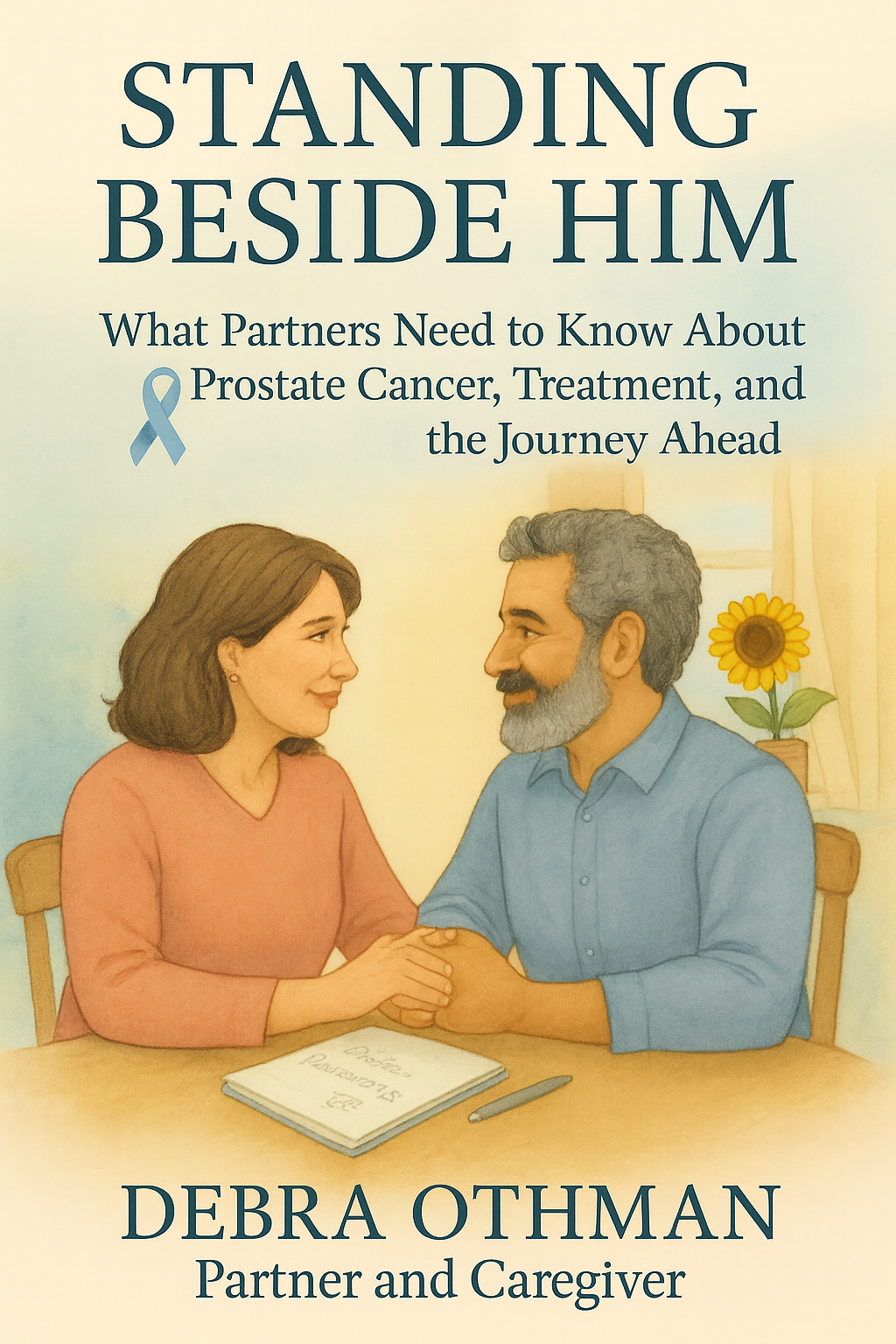
🌻 Learn more about Standing Beside Him → debraothman.com/the-book

💛 Relationship & Connection
Understanding Sexual Grief & Intimacy Changes After Prostate Cancer
3/2026
Many couples are surprised by how much prostate cancer treatment can affect intimacy. Doctors often focus on survival, treatment plans, and side effects, but very few couples are prepared for the emotional and relational changes that can follow.
For many partners, the shift begins quietly. Affection changes. Desire fades. Conversations about intimacy become uncomfortable or disappear altogether. Some couples begin avoiding physical closeness because they are unsure what it might lead to.
These changes can bring a form of grief that many caregivers have never heard named before.
What Is Sexual Grief?
Sexual grief is the emotional mourning that can occur when sexual desire, function, or intimacy changes after treatment.
Hormone therapy, especially androgen deprivation therapy (ADT), lowers testosterone levels dramatically. This can affect libido, erections, emotional responsiveness, and energy levels. These changes are driven by the treatment itself, not by a loss of love or commitment.
For partners, the experience can feel confusing and painful. Many caregivers describe feeling rejected or wondering whether their partner still finds them attractive. At the same time, many men struggle privately with feelings of embarrassment, loss of identity, or fear of disappointing their partner.
Both people may be grieving the same loss but struggling to talk about it.
Why Couples Often Pull Away
When intimacy changes suddenly, couples sometimes begin protecting each other in ways that unintentionally create distance.
A partner may stop initiating touch because they worry it will lead to expectations they cannot meet. The caregiver may hesitate to reach out physically because they do not want to create pressure.
Over time, affection can become cautious. A quick kiss replaces a lingering one. Holding hands becomes less frequent. Neither partner may realize that both are trying to protect the other from pain.
Intimacy Can Be Rebuilt in New Ways
Although sexual changes can be painful, many couples rediscover closeness in ways they did not expect.
Reconnection often begins with small moments of safety rather than sexual performance.
This might include:
• sitting close together
• holding hands
• hugging without expectation
• sharing quiet time at the end of the day
• talking honestly about what each partner is feeling
These moments may seem small, but they can begin restoring emotional safety and connection.
When to Seek Additional Support
If intimacy changes begin creating ongoing sadness, frustration, or distance, it can help to involve members of the medical care team.
Many cancer centers now recognize sexual health as an important part of survivorship. Urologists, oncology nurses, and survivorship programs may be able to refer couples to professionals who specialize in sexual health after cancer treatment.
Certified sexual health therapists and counselors can help couples talk openly about sensitive concerns and explore ways to maintain closeness while navigating physical changes.
Directories such as the American Association of Sexuality Educators, Counselors, and Therapists (AASECT) can help couples locate professionals who understand cancer-related intimacy challenges.
Sexual grief is rarely discussed openly, but many couples experience it during prostate cancer treatment.
If intimacy feels different right now, it does not mean your relationship is broken. It means your relationship is adapting to a difficult medical journey.
Many couples rediscover connection slowly, one small moment at a time.
Additional caregiver resources and support organizations can be found in the Resources section of this website and in the appendices of Standing Beside Him: A Caregiver’s Journey Through Prostate Cancer.
Many caregivers feel alone when intimacy changes after prostate cancer treatment, but this experience is far more common than most couples realize. If you are navigating this part of the journey, you are not the only one learning how to rebuild closeness in new ways. Additional guidance and caregiver reflections are available throughout the site, along with trusted support resources for couples facing these challenges.

🧠 Emotional Changes & Treatment Effects
Lupron Mood Swings and Relationship Strain During Prostate Cancer Treatment
02/2026
Hormone therapy and radiation can change more than lab numbers. Many caregivers notice mood swings, withdrawal, irritability, and emotional distance during ADT (Androgen Deprivation Therapy) . This guide explains why it happens and how to protect your relationship and your own well-being.
Lupron Mood Swings and Personality Changes During ADT: A Guide for Caregivers
It is common for partners to feel like their husband’s personality has shifted after Androgen Deprivation Therapy (ADT) and radiation.
Many caregivers describe it this way: “He is still here, but he doesn’t feel like himself.”
When prostate cancer treatment begins, most conversations focus on survival, PSA levels, and radiation schedules. Far less attention is given to what happens inside the marriage.
ADT lowers testosterone to very low levels. Testosterone influences more than sexual function. It affects mood, motivation, patience, sleep, and cognitive sharpness. When levels drop suddenly, the emotional impact can be significant.
The changes you are seeing are often not intentional. They are usually the result of biological shifts combined with emotional strain.
Low testosterone can increase irritability and emotional sensitivity. Some men become tearful in ways that surprise them. Others become short-tempered or lose the drive they once had. Situations that once felt manageable may suddenly feel overwhelming.
Depressive symptoms can also emerge during ADT. This does not always look like classic depression. It may show up as withdrawal, loss of interest, hopelessness, or emotional flatness.
Some men experience cognitive fog. They may struggle with focus or feel less sharp than they once did. Even without chemotherapy, hormone therapy can affect executive function and memory. That frustration can spill into everyday interactions.
Fatigue adds another layer. Chronic exhaustion and disrupted sleep reduce patience and emotional resilience. When someone is depleted, their usual temperament can shift.
For the partner, this can feel like losing the man you knew — even while you are grateful he is receiving treatment.
I Have Been There
When my husband began radiation and ADT, I was unprepared for how quickly the emotional shift occurred. The affectionate, warm man I knew seemed to retreat almost overnight. I remember standing in the kitchen wondering where he had gone, even though he was physically present. I also remember feeling ashamed for missing him while he was still here.
Later, as I spoke with other women, I heard the same story again and again. The loneliness. The confusion. The sense that something sacred had changed.
If you are feeling that kind of loss, you are not imagining it.
Will Mood Swings Improve?
There is no single timeline.
Some men experience stronger emotional volatility in the early months of hormone therapy and gradually stabilize. Others continue to struggle throughout treatment and may benefit from additional medical or mental health support. Testosterone levels can take months to recover after ADT ends, and even then, emotional adjustment may take time.
If mood changes feel severe, prolonged, or unsafe, bring that to the oncology team’s attention. Emotional health is part of cancer care.
This article is not medical advice, but a reflection on patterns reported by couples during prostate cancer treatment.
Will He Go Back to Himself After ADT?
This is one of the most anxious questions caregivers ask.
In many cases, emotional side effects lessen after hormone therapy ends. But improvement is rarely immediate.
When ADT stops, the body gradually begins producing testosterone again. As hormone levels recover, mood stability, patience, and mental clarity often improve. As fatigue and hot flashes decrease, irritability may soften as well.
Recovery takes time.
For men on shorter courses of ADT, mood may begin improving within several months after the last injection. For longer-term treatment, it may take considerably longer for testosterone to reach levels that support emotional steadiness. In some older men, hormone levels may not return fully to their previous baseline.
That does not mean he will not feel better. It may mean the adjustment is gradual rather than dramatic.
It is also important to remember that not every emotional change is purely chemical. Fear of cancer, identity shifts, and anxiety about recurrence can continue even after treatment ends. As follow-up appointments become reassuring and daily life regains rhythm, emotional tension often eases.
If several months pass after treatment and mood remains significantly unstable, it is reasonable to ask the oncology team to review hormone levels and discuss options.
Improvement is common. Instant reversal is not.
When He Withdraws or Shuts You Out
Many men cope with fear privately. Crying alone, shutting down emotionally, or becoming irritable can be protective responses to vulnerability. That does not make the distance easier to live with.
You are allowed to say that this is affecting you too. Not as blame. Not as accusation. Simply as truth.
A relationship cannot remain steady if only one person’s emotional experience is acknowledged.
When He Refuses Counseling or Medication
One of the hardest realities caregivers face is seeing the emotional changes clearly while he refuses help.
He will not take medication.
He will not see a counselor.
He insists nothing is wrong.
You cannot force someone into emotional care.
But his refusal does not eliminate your right to support.
You are allowed to seek counseling for yourself even if he will not go.
You are allowed to build support outside the marriage during treatment.
You are allowed to say calmly, “I respect your decision, but I need support too.”
Sometimes resistance comes from pride. Sometimes from fear. Sometimes from exhaustion. You can invite help. You cannot carry both people alone.
If he refuses support, your work shifts to protecting your own stability.
When Mood Changes Cross a Line
Irritability and emotional swings can accompany hormone suppression.
But anger that becomes intimidating, verbally cruel, or emotionally unsafe is not something you are required to absorb.
Lower testosterone can influence mood. It does not remove responsibility for respectful behavior.
If conversations escalate, pause and say, “I want to talk, but not like this.”
If you feel emotionally unsafe, step away.
If behavior becomes threatening or physically unsafe, prioritize your safety and seek outside help.
Treatment may explain some changes. It does not excuse harm.
A Stronger View of Self-Care
Self-care during ADT and radiation is not indulgence. It is maintenance.
Protect your sleep.
Move your body regularly, even in small ways.
Stay connected to at least one grounded person who knows what you are living.
Limit how much emotional escalation you absorb in a single day.
Create one small daily ritual that belongs only to you.
This is not selfishness.
It is preservation.
If you disappear emotionally in order to keep the peace, the relationship loses both of you.
🌻 Tool & Resource Reminder
The Emotional Check-In Scale and Couples Communication Page are part of the Caregiver Binder framework inside Standing Beside Him. The full guide to navigating treatment, intimacy, and emotional strain will be available soon.
Holding Both Truths at Once
Prostate cancer treatment can change hormones, energy, and mood. It can also strain the quiet places in a marriage.
Both things can be true at the same time.
He may be struggling in ways he does not know how to name.
You may be hurting in ways you have been trying not to show.
This season does not have to define the rest of your relationship.
With awareness, steady boundaries, and support where needed, many couples find their footing again. Sometimes the connection looks different. Sometimes it grows deeper because both people learn to speak more honestly than they ever have before.
You are not wrong for missing who he was before treatment.
You are not wrong for needing care yourself.
And you are not alone in trying to hold both love and exhaustion at the same time.
Standing beside him does not mean standing without yourself.
Be Notified When the Book Launches
Standing Beside Him is a structured caregiver guide built around the Caregiver Binder framework, designed to help couples navigate prostate cancer treatment with clarity and steadiness.
If you would like to be notified when the book becomes available, you can join the email list here:
debraothman.com/start-here

🌍 Awareness & Advocacy
02/20/2026

In honor of Black History Month, we reflect on health equity and the impact of prostate cancer in Black communities. Every family deserves equitable care, clear information, and to be fully heard.