💬 Partners & Spouses News & Reflections
A place for caregiver reflections, relationship conversations, emotional support, research updates, and the quieter parts of life alongside prostate cancer that people do not always talk about openly.
🌻Featured Reflection
What Happens If the Caregiver Needs Care Too?
Most caregivers spend years planning for what their spouse may need. Far fewer think about what would happen if they became the person who needed help.
When the Caregiver Needs Care Too
Much of the caregiving information available today focuses on the person who has been diagnosed. We read about treatments, medications, appointments, side effects, and ways to support a spouse through illness. While those topics are important, they often overlook a reality many caregivers quietly live with every day.
Many caregivers are managing health challenges of their own.
Some are living with diabetes, arthritis, heart disease, chronic pain, mobility limitations, or a history of cancer. Others are recovering from surgeries, coping with fatigue, or juggling their own medical appointments while helping someone they love navigate a serious diagnosis.
Those personal health concerns do not disappear when a spouse becomes ill. The caregiver still has medications to take, appointments to attend, and health concerns that require attention. Yet many of us push those needs aside because the person we love seems to need us more.
Over the years, I have come to believe that many caregivers are caring for two people at the same time. One is the person everyone sees and worries about. The other is the caregiver who is quietly trying to keep going despite their own health concerns, worries, and limitations.
Recently, a friend shared an experience that stayed with me.
Late one evening she fell and broke her ankle. She knew almost immediately that something was seriously wrong. What surprised me was not the injury itself. It was what she chose to do afterward.
She did not call an ambulance. She did not wake her neighbors. Somehow, she managed to get herself back into bed and spent the night in pain. The following morning she called a friend and asked for a ride to the emergency room.
When she told me the story, I was upset with her. Not because she had fallen, but because she seemed more concerned about inconveniencing her neighbors than she was about her own health and comfort.
The more I thought about it, the more I realized how common that thinking can be among caregivers and older adults.
Many of us have spent years being the helper. We are comfortable taking care of other people. We are comfortable showing up when someone else is in need. What many of us are not comfortable doing is becoming the person who needs help.
We worry about bothering people. We tell ourselves we can manage on our own. We convince ourselves that whatever is happening can wait until morning.
Yet if the situation had been reversed, most of us would have been upset to learn that a friend had spent the night with a broken ankle rather than calling for help.
Less than a month later, while still wearing a walking boot, my friend fell again and broke her hip. After several weeks in rehabilitation, she faced another challenge. She had to figure out how she was going to manage once she returned home.
Fortunately, she had wonderful neighbors and loyal friends who stepped in to help. They checked on her, helped with errands, and made sure she was not facing recovery alone.
As grateful as I was for her, it also made me realize how fortunate she was.
Many older adults have watched their support circles become smaller over the years. Children may live in another state. Friends may be dealing with health issues of their own. Neighbors move away. Retirement, illness, and loss can quietly shrink the number of people we can call when we truly need help.
That realization raises a question many caregivers rarely ask themselves.
What would happen if I became the person who needed care?
It is not a negative question. It is a practical one.
Life can change quickly. A fall, a surgery, an illness, or an unexpected hospitalization can suddenly leave an independent person needing assistance.
That is why I believe every caregiver should spend some time thinking about a backup plan.
Who would you call if you needed help getting home from the hospital? Who has a key to your house? Who could pick up groceries or prescriptions if you could not drive for a few weeks? If you are caring for a spouse, who could help them if you were temporarily unable to do so?
You do not need a large network of people. Even identifying one or two reliable contacts can make an enormous difference during a crisis.
One simple step is creating an emergency information sheet and placing it on your refrigerator. Include emergency contacts, physician information, medications, allergies, and important medical conditions. If you have completed an advance directive, healthcare power of attorney, or other important planning documents, make sure someone knows where they are stored.
Emergency responders are often trained to look for important information on the refrigerator because it is one of the easiest places to find during an emergency.
Another lesson I learned came from my mother.
Like many older adults, she no longer had a house phone. Her cellphone was usually somewhere nearby, and I suspect she assumed that would be enough.
One day she fell and was unable to get up. Unfortunately, her phone was not within reach.
She remained on the floor for three days.
A neighbor eventually became concerned when she noticed that the newspaper and mail had not been picked up. When she looked through a window, she discovered my mother inside the house.
She died as a result of the fall.
That experience changed the way I think about emergency planning.
Today, many of us rely entirely on cell phones. The problem is that a phone cannot help if it is sitting on a kitchen counter, charging in another room, or lying on a table that you cannot reach.
For that reason, I encourage older adults and caregivers to think about how they would call for help if they fell and could not get up. Some people choose a medical alert system. Others wear a phone lanyard or use a crossbody phone strap that keeps their phone with them throughout the day.
The specific solution is less important than the habit.
If you live alone, spend part of the day alone, or have health concerns that increase your risk of falling, make sure you have a reliable way to call for help when you need it.
It is a simple step, but it can make all the difference
Many caregivers are surprised to discover that resources may already exist in their communities. Organizations such as AARP provide information on caregiving, aging in place, transportation options, home safety, and local support services. The Village movement has created volunteer-based communities throughout the United States that help older adults remain independent and connected. Through the Village to Village Network, individuals can search for a Village in their area and learn what support may be available nearby.
Many communities also have Area Agencies on Aging, transportation programs, meal delivery services, and volunteer organizations that can provide assistance when it is needed.
Perhaps the most important lesson I am learning as I grow older is that independence and planning are not opposites.
Having a plan does not mean you expect something to go wrong. It simply means you understand that life can change quickly and that preparing for the unexpected is an act of wisdom rather than fear.
Most caregivers spend years planning for what their spouse may need. It may be just as important to spend a little time planning for what happens if one day you become the person who needs help.
It Was His Cancer. It Changed Both of Our Lives.

For a long time, I thought prostate cancer was something happening to my husband. It took me nearly two years to understand that it was changing both of our lives.
Nasser and I handle stress very differently. When life becomes overwhelming, he sleeps. I do the opposite. During those months after his diagnosis, I often found myself awake long after he had fallen asleep. While the house was quiet and the rest of the world seemed to be resting, I sat with my laptop searching for answers.
I read medical articles, patient forums, caregiver groups, treatment studies, and personal stories. Looking back, I think I was also trying to find my tribe.
After a while, I began to recognize patterns. I could often tell where someone was in the journey simply by the questions they were asking. The newly diagnosed spouses wanted certainty. People in treatment wanted reassurance. Those dealing with recurrence were searching for hope. Although the details were different, many of us were wrestling with the same fears. We wanted to know whether treatment would work, whether our relationships would survive the changes ahead, and whether life would ever feel normal again.
What I discovered was a vast room filled with people doing exactly what I was doing. They were searching, trying to understand, and trying to feel less alone. Some nights the information helped. Other nights it terrified me. One answer often led to three more questions. What I did not understand at the time was that I was not really searching for information at all. Beneath all of that reading and researching, I was searching for reassurance.
When my husband was diagnosed, everyone naturally focused on him. His appointments, treatments, side effects, and fears became the center of attention. And of course they should have. He was the patient.
What I didn't understand at the beginning was that while he was going through cancer, I was going through something too. The diagnosis belonged to him, but the experience belonged to both of us.
Like many spouses, I slipped into caregiver mode almost immediately. I organized appointments, researched doctors, kept track of information, and tried to stay strong when both of us were frightened. At first, I thought the hardest part would be hearing the diagnosis. Looking back, I realize the harder part was watching our life slowly change in ways neither of us expected.
Cancer entered our marriage quietly at first, but before long it seemed to be everywhere. Conversations changed. Plans changed. Priorities changed. Even ordinary days felt different. We were no longer simply husband and wife moving through life together. We had become patient and caregiver too.
As time went on, I realized I was grieving things I could not easily explain to other people. I missed our old ease with each other. I missed our independence. I missed the confidence that tomorrow would probably look a lot like today. Most of all, I missed parts of the man I had always known.
Treatment, especially ADT, brought changes that neither of us fully understood at the time. The physical side effects were difficult enough, but the emotional changes caught me off guard. There were periods of anger, withdrawal, exhaustion, and distance that felt unlike the husband I knew. At times I felt as though I was living beside someone who looked familiar but emotionally felt far away. Nobody had prepared me for that part. Nobody told me that caregiving could feel lonely while the person you love is still sitting right beside you.
What made the experience even more complicated was that I had already lost a husband years earlier.
I knew what devastating loss felt like. I knew what it meant to watch a future disappear. I knew what it felt like to rebuild a life after grief.
When I met Nasser, I never imagined I would find myself facing another serious illness. We had built a life together. We were supposed to be enjoying this season of our lives, not sitting in doctor's offices discussing cancer, treatment decisions, and side effects.
That previous loss changed the way I experienced prostate cancer. Every test result carried a little more weight. Every setback felt a little more frightening. Every conversation about treatment stirred memories I thought had been put away years earlier.
Waiting for test results, hearing difficult conversations, and watching treatment affect the person I loved stirred memories and fears I thought I had left behind. Part of my fear was about what might happen to Nasser. Another part came from remembering what had already happened in my own life.
At times I experienced overwhelming anxiety, flashbacks, anticipatory grief, and the deep fear of facing another profound loss. I was caring for my husband in the present while carrying memories of the man I had already lost. That is something very difficult to explain unless you have lived it.
Looking back, I realize that cancer gradually changed more than our schedules and priorities. It changed the way we lived.
Nasser and I isolated ourselves, although at the time I don't think either of us fully realized we were doing it. Living in a rural area made it easy. We stopped seeing people. I stopped visiting friends. I stopped inviting people to our home. One month turned into another, and before I knew it, nearly two years had passed.
The truth is that somewhere along the way, I lost myself.
Part of it was fear. Part of it was exhaustion. Part of it was the feeling that every ounce of energy needed to be directed toward helping my husband get through treatment and whatever came next.
At the same time, I was carrying other losses in my life. I had already experienced profound grief. I had lost my children and my sister, and I found myself doing something I suspect many caregivers do when they are frightened. Not in any logical way, and not usually in words I said out loud. But underneath the research, the appointments, the worry, and the effort to stay positive was a quiet plea that never seemed very far away.
Having already lost so much, I found myself asking God for just one thing.
Please don't take my husband too.
That fear followed me for a long time.
What finally began pulling me out of that dark place was something I never expected.
It was writing this book.
At first, I was simply trying to gather information and organize resources. But as the project grew, it gave me something beyond the next appointment and the next test result. It connected me with other caregivers. It reminded me that our story might help someone else.
Little by little, writing became a way back to myself.
The depression that had settled over both of us did not disappear overnight, but the book gave me something to reach toward. It gave me a reason to look ahead instead of focusing only on what I was afraid of losing.
One experience stands out in my memory more than almost anything else. My husband and I traveled nearly 200 miles from home so he could receive six radiation treatments along with ADT. The treatment itself lasted only about a week, but by then our lives had been revolving around prostate cancer for months. We had spent countless hours researching, making decisions, attending appointments, discussing treatment options, and wondering what the future might hold.
When treatment was finally over and we returned home, I expected both of us to feel relieved. Instead, we were exhausted. Not the kind of tired that comes from a poor night's sleep. This felt much deeper than that.
The day after we got home, both of us settled into our recliners. I do not remember which one of us mentioned it first, but we were both thirsty. The kitchen wasn't far away, and there was nothing physically preventing either of us from getting up. Yet the simple act of walking into the kitchen and getting a glass of water felt like too much effort.
I remember sitting there thinking about lemons because my mouth felt so dry. Somehow imagining a lemon seemed easier than getting up and walking into the kitchen for a glass of water.
At the time it seemed almost ridiculous, but looking back I think it says a great deal about what we had been carrying. The radiation treatments lasted only a week. The fear, uncertainty, responsibility, and emotional strain had been building for months. We had been moving from one appointment to the next and from one decision to the next without really stopping to absorb what was happening.
For days after we returned home, both of us mostly slept. We drifted off in our chairs, fell asleep during afternoon movies, and found ordinary tasks such as doing laundry surprisingly difficult. At first I assumed it was simply the physical effects of treatment. As the days passed, however, I began to realize that something else was happening.
We had spent months holding our breath emotionally. Once treatment was complete and there was nothing immediate to do, all of the fear and tension we had been carrying seemed to catch up with us at once. Looking back, I believe we were experiencing anticipatory grief. We had spent so much time preparing ourselves for what might happen that we had not fully recognized the emotional weight we were carrying. When the immediate crisis eased, our minds and bodies finally had room to acknowledge it.
That week taught me something important. Caregivers and patients do not simply carry the burden of treatment itself. They also carry months of fear, uncertainty, responsibility, and emotional strain. Sometimes we do not feel the full weight of it until we finally stop moving.
As time went on, I began searching for resources that spoke directly to spouses and caregivers. There were excellent medical resources. There were treatment guides. There were patient support groups. But I struggled to find enough honest conversations about what was happening to caregivers themselves.
I wanted someone to tell me that feeling frightened, lonely, exhausted, angry, overwhelmed, and grief-stricken did not make me a bad caregiver. I wanted someone to talk openly about relationship changes, anticipatory grief, intimacy, identity, and emotional survival.
Over time I realized that many other spouses were asking the same questions I was asking. The more stories I read, the more I understood that I was not alone. Eventually, that realization became one of the foundations for Standing Beside Him.
Not because I had all the answers, but because I knew I could not have been the only person feeling this way.
If you have found yourself grieving parts of your old life, feeling lonely beside the person you love, or carrying fears you rarely say out loud, I hope this article helps you feel a little less alone.
Caregiving can be beautiful, meaningful, frustrating, exhausting, and heartbreaking, sometimes all in the same day. Many of the feelings we experience as spouses and caregivers are rarely discussed, yet they are far more common than we realize.
For a long time, I thought many of these struggles belonged only to me. The more caregivers I met, the more I realized how many of us were carrying the same fears, questions, and quiet grief.
If you are walking a similar road, I hope you will give yourself the same grace and compassion you so freely offer the person you love.
About the Author
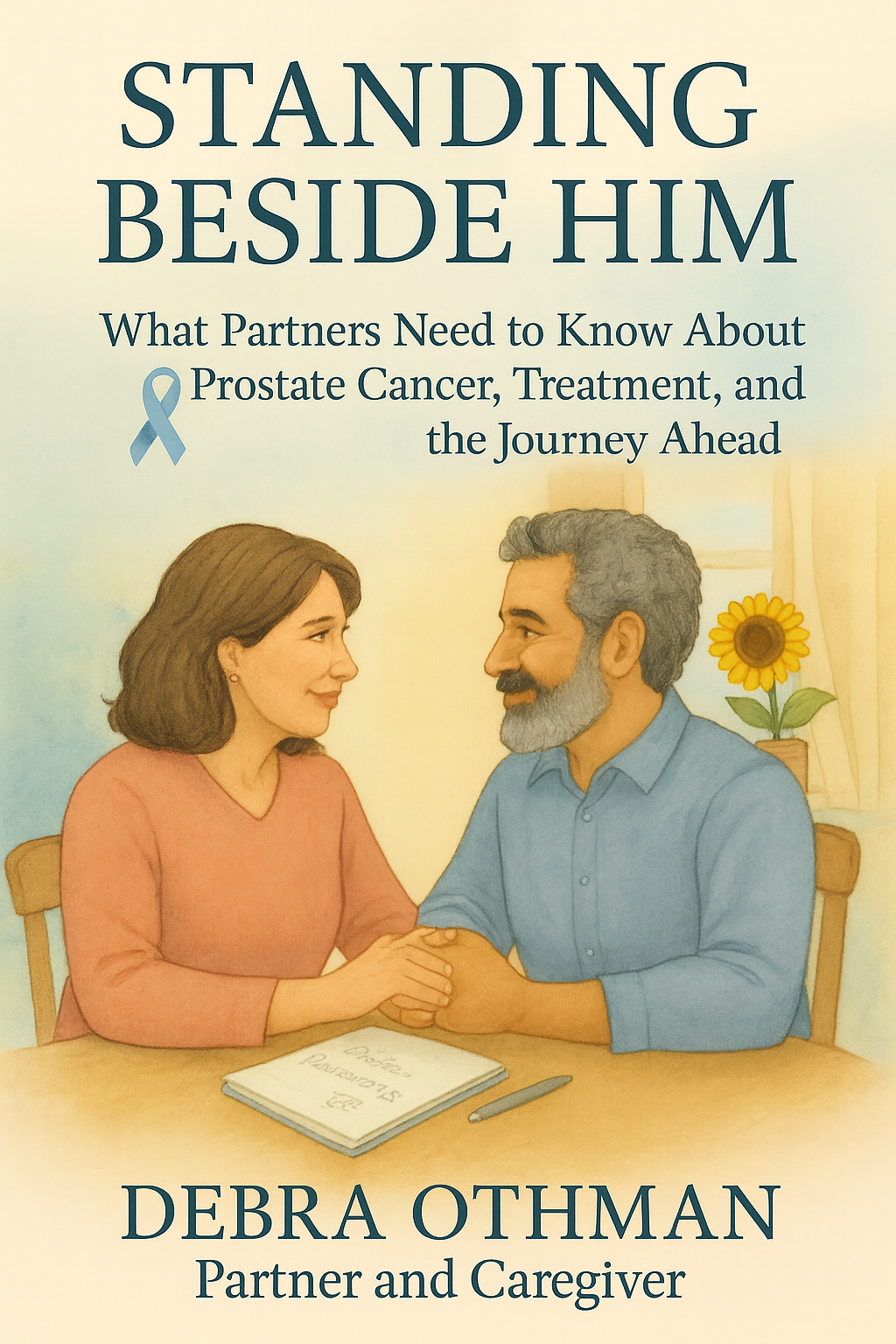
Debra Othman is the author of Standing Beside Him, a guide for spouses and partners navigating prostate cancer. Drawing from her own caregiving experience, she writes about the emotional realities of caregiving, relationship changes, grief, resilience, and finding your way through difficult seasons of life.
Learn more at debraothman.com.
💬 New Reflection
When You're Both Scared but Neither of You Says It

A recent study of couples coping with prostate cancer found that many partners and patients were carrying the same fears at the same time, yet neither wanted to burden the other by talking about them. This reflection explores what happens when two people try to protect each other through silence.
When You're Both Scared but Neither of You Says It
When my husband was diagnosed with prostate cancer, I expected there would be difficult conversations. I expected we would have to talk about treatment options, side effects, and the uncertainty that comes with a cancer diagnosis.
What I did not expect was how many important conversations never happened.
Like many couples, we spent a lot of time discussing appointments, test results, medications, and schedules. There was always another decision to make or another appointment to prepare for. We talked about what needed to be done, but we did not always talk about what we were feeling.
I worried about the future. He worried about the future. Neither of us wanted to make things harder for the other person.
Without realizing it, we were both trying to protect each other.
A recent study of couples coping with prostate cancer found that this experience is surprisingly common. Researchers discovered that many couples were carrying the same fears at the same time, yet often kept those fears private. Both partners were struggling with uncertainty, frustration, and emotional distress while trying to spare the person they loved from additional worry.
At first, that sounds caring and considerate. In many ways it is. The problem is that silence can create distance when connection is needed most.
One partner may lie awake worrying about whether treatment will work. The other may be lying awake with the same thoughts. One may be grieving the loss of the life they expected. The other may be doing exactly the same thing. Yet neither person brings it up because they believe they are helping by staying strong.
Over time, two people can begin carrying the same burden separately.
I hear versions of this story often from partners and spouses. One person tells me they cry in private because they do not want their loved one to see how frightened they are. Another tells me they never share their fears because they believe their partner already has enough to carry.
The intention is loving. The result is often loneliness.
The researchers found that many couples struggled with hidden emotional distress, frustration, changes in family and social relationships, and the constant effort required to manage daily life after diagnosis. What stood out to me, however, was that the couples who adapted best did not necessarily have fewer challenges. Instead, they gradually stopped facing those challenges alone.
That shift did not happen overnight.
For some couples, it started with small conversations. They became more honest about what they were thinking and feeling. They began sharing concerns instead of carrying every worry privately. They approached treatment decisions together and learned to talk about what each person needed during difficult periods.
The conversations were not always comfortable. They were simply honest.
The study also found that couples who adapted well eventually stopped waiting for life to return to exactly what it had been before cancer. They accepted that things had changed and began focusing on how to move forward from where they were rather than where they wished they could be.
That does not mean they liked the diagnosis or welcomed the disruption it caused. It means they stopped measuring every day against the life they had lost and started building a new sense of normal together.
Another interesting finding was that some couples reported feeling closer after diagnosis. Not because cancer improved their lives, but because it forced them to pay attention to each other in ways they had not for years. Several participants described a renewed sense of partnership as they faced decisions, setbacks, and uncertainty together.
The study also highlighted the challenges surrounding intimacy. Changes in sexual function, confidence, and physical closeness affected many couples. Those who adapted best were often the ones who found new ways to stay connected. They focused on companionship, affection, understanding, and shared experiences rather than trying to make everything return to the way it had been before treatment.
Many couples also focused on what they could control. They attended appointments together, learned about treatment options, improved their eating habits, exercised, and created routines that helped them feel less overwhelmed. These actions did not eliminate fear, but they helped restore a sense of purpose and stability.
One of the most important lessons from this research is that adaptation is not about becoming the perfect couple. It is not about always saying the right thing or handling every challenge gracefully. It is about moving from "I am carrying this alone" to "We are carrying this together."
If you and your partner have been protecting each other by keeping your fears private, you are not unusual. Many loving couples do exactly the same thing.
The challenge is remembering that the person sitting across from you may be carrying worries very similar to your own. Sometimes the conversation you are hesitant to start is the same conversation they have been waiting to have.
The couples who seemed to find their footing again were not the ones who avoided difficult conversations. They were the ones who gradually learned that facing those conversations together was easier than facing them alone.
Related Reading
Cancer Ghosting: When People Disappear — and What You Can Do Instead
When Grief and Relief Exist Together
The Partner & Caregiver Tools Library