🌻 Fresh Tools & Ideas
🌟 Featured Article🌟
When Your Husband Starts Feeling More Like a Roommate Than a Partner
Part 1 — The Woman’s Side of the Story
This is the first article in a three-part series about something many couples quietly experience during prostate cancer treatment and ADT, but very few people talk about honestly. Not the medical side. Not the PSA numbers. Not the treatment schedules. The relationship side.
In this first article, I want to speak openly about the woman’s side of this experience: the loneliness, the loss of intimacy, the emotional withdrawal, the grief, the anger, the sexual frustration, the guilt, and the private heartbreak that can happen when the person you still deeply love slowly starts feeling more like a roommate than a partner.
In Part 2, we are going to talk honestly about the men’s side of this experience — libido loss, emotional shutdown, shame, depression, fear, and what ADT can do psychologically to identity and intimacy. In Part 3, we are going to talk about what support, coping strategies, counseling options, intimacy adaptations, and resources are actually available for couples trying to navigate these changes together.
Because this subject deserves more honesty than it usually gets. And women deserve honesty too.
Nobody warned me that prostate cancer treatment could slowly erase the feeling of being wanted inside my own marriage.
People warned us about hot flashes, fatigue, mood swings, erectile dysfunction, hormone therapy, radiation, and medical side effects. But nobody sat me down and said there is a chance your husband may stop touching you almost completely — not just sexually, emotionally too.
Nobody explained what it feels like to lie beside the person you still deeply love while slowly realizing you no longer feel desired by them at all.
Nobody warned me that one of the deepest losses might not actually be intercourse itself. It might be affection. It might be the loss of being reached for, being held, being kissed slowly, being flirted with, being looked at with desire, being touched casually in passing, or being chosen physically at the end of the day.
At my house, it eventually became a joke: “No sex for you.”
Humor is sometimes how couples survive things too painful or awkward to say directly. But underneath the joke was something very real.
The affection slowly disappeared. The lingering hugs disappeared. The casual touching disappeared. The playful affection disappeared. Kisses became quick pecks on the cheek — brief, controlled, careful — almost like my husband was intentionally trying to make sure I would not mistake affection for desire or think he was teasing me.
And after a while, something inside you starts changing. You stop feeling like a wife. You start feeling emotionally invisible.
That is the part many women are afraid to admit publicly because the guilt arrives almost immediately.
“He has cancer.”
“He is suffering too.”
“This is not about me.”
“I should not complain.”
“I should just be grateful he is alive.”
And yes, all of those things are true.
But let’s stop pretending women suddenly stop having emotional and physical needs because their husband developed prostate cancer.
You still want sex. You still want touch. You still want affection. You still want passion. You still want intimacy. You still want to feel attractive. You still want to feel wanted. You still want to feel like someone’s wife instead of someone’s caregiver, scheduler, nurse, or roommate.
And pretending those needs disappeared does not make someone noble. It makes them lonely.
Some women have not been truly held in years. Some have stopped initiating affection completely because repeated rejection becomes humiliating after a while. Some women cry privately in bathrooms, showers, parked cars, or dark bedrooms because they miss being touched by the person they still love.
Some women masturbate quietly and then feel ashamed afterward because they love their husband and feel guilty for still having a functioning libido. Some women wonder if they will ever feel sexually desired again for the rest of their lives. That is a brutally painful thought to carry silently.
And yes, women become angry sometimes. Not necessarily at their husband. Not even always at the cancer. Sometimes they are angry because nobody prepared them for this level of emotional and sexual loss.
One of the things I struggle with most honestly is how little couples are emotionally prepared for how common these changes actually are. We were warned about erectile dysfunction almost casually, like it was a possible inconvenience instead of something that could profoundly affect intimacy, identity, emotional connection, and marriage itself.
But the statistics are not small.
Depending on treatment type, age, baseline function, and whether hormone therapy is involved, sexual dysfunction rates after prostate cancer treatment can be extraordinarily high.
• After prostate surgery, erectile dysfunction rates are often reported between 30% and 90%.
• Radiation treatment can result in long-term sexual dysfunction rates ranging roughly from 50% to 90%.
• ADT (Androgen Deprivation Therapy) can be even more devastating to libido and sexual function, with many studies reporting severe libido loss and sexual dysfunction affecting 70% to 90% of men.
Those numbers should have led to far more honest conversations with couples before treatment ever started.
Because these statistics are not just about erections.
They can also become loss of desire, loss of affection, loss of confidence, loss of touch, emotional withdrawal, loneliness, grief, and the quiet reshaping of an entire marriage.
Nobody explained what it feels like when your husband no longer reaches for you. Nobody explained that you might eventually stop asking for closeness because hearing “not tonight” or feeling someone subtly pull away from touch starts hurting too much emotionally. Nobody explained that some women eventually stop bringing intimacy up at all because they fear becoming a source of pressure, guilt, frustration, or resentment inside the relationship.
And nobody explained what this can do psychologically to a woman’s sense of herself.
There are moments where I look in the mirror and wonder whether I will ever feel truly desired again in my life. That is not vanity. That is identity.
Many women quietly begin feeling sexually erased while still technically married. And that is an incredibly lonely emotional place to live.
My husband and I have not slept in the same bedroom for years because of his ADHD and how he functions preparing for his day. The ADHD was not diagnosed until later in life, and for a long time we still maintained rituals that made us feel emotionally connected.
He would come lay with me at night. We would watch movies together, snuggle, talk, and sometimes drift off together before he returned to his own room.
That mattered more than I realized at the time.
But that stopped in January 2024.
And honestly, that loss hit me harder than I expected because intimacy is not only intercourse. It is being sought out. Being chosen. Feeling like someone still wants to lay beside you at the end of the day.
I have asked for that connection back. I have almost begged for it. I have told him honestly that I sometimes feel more like his roommate than his wife.
But nothing seems to get through.
And that is an incredibly lonely thing to admit publicly.
At some point, I made a decision. I was not giving up on my marriage, and I was not giving up on him. But I was going to stop asking him to come snuggle with me, lay with me, or reconnect emotionally in ways he was clearly pulling away from.
Not because I stopped wanting it.
But because constantly asking for connection and feeling emotionally avoided or rejected was beginning to hurt me deeply and add pressure inside the relationship itself.
There comes a point where repeatedly asking someone to reach for you starts damaging your dignity, especially when you know they are struggling too.
So now I wait.
Not because the loneliness disappeared. Not because I no longer want closeness. But because intimacy cannot survive entirely on one person begging for emotional connection.
And this is where the emotional contradictions become overwhelming.
I love my husband deeply. I know he is suffering too. I know ADT changes people emotionally and physically. I know grief and trauma exist on both sides of this experience.
But understanding the reasons does not magically erase loneliness.
Compassion and heartbreak can exist together. Love and resentment can exist together. Loyalty and emotional starvation can exist together.
That is one of the hardest truths women carry privately.
I also know some couples eventually move toward open marriages or outside relationships after years of lost intimacy. I am not judging anyone who makes those choices. People are trying to survive emotionally the best way they can.
But I know that would not work in my marriage. Honestly, even bringing it up would probably deeply damage the relationship between us.
So for me, this is not about looking elsewhere. It is about trying to understand whether intimacy, affection, emotional closeness, and physical connection can somehow find their way back into our marriage in another form over time.
And that uncertainty is frightening.
Because there are moments where I quietly wonder:
Is this simply what the rest of my life looks like now?
Not because the love disappeared. But because intimacy, affection, emotional closeness, and desire have become so fragile and uncertain that the future itself starts feeling emotionally unfamiliar.
And honestly, one of the hardest things for me personally has been sitting inside prostate cancer support groups reading posts from couples saying:
“Our sex life is even better now.”
“We do not have intimacy problems.”
“He had surgery and everything is wonderful.”
And I am genuinely happy for couples who experienced that.
But let’s stop pretending that is everyone’s reality.
For many couples, it is not the reality at all.
Many women are quietly living inside nearly sexless marriages after treatment. Many are living with complete libido loss, severe erectile dysfunction, emotional withdrawal, and the disappearance of affection itself.
Some women have not felt desired in years.
And reading post after post that makes recovery sound easy can sometimes leave struggling women feeling even more isolated, defective, angry, or ashamed.
Especially because behind closed doors, many couples are struggling far more than they admit publicly.
Some marriages survive medically while slowly becoming emotionally sterile. Still married. Still functioning. Still caregiving. Still sharing a home. But privately feeling worlds apart.
And women need someplace where they are finally allowed to say:
“This hurts too.”
Not because they stopped loving their husband. Not because they care less about his suffering.
But because they are part of this cancer story too.
For us, this is still relatively new. I know we are both grieving. I know we are both carrying separate trauma from everything prostate cancer and ADT brought into our lives.
And I know at some point we are going to have to cross this road together and figure out whether intimacy is going to return to our marriage in some form.
Not necessarily exactly the way it once existed. But somehow.
Because emotional and physical connection still matter.
And honestly, I would truly like to hear from other women living through this.
Did intimacy eventually return in some way? Did emotional closeness slowly come back? What helped? What did not help? What do you wish someone had told you earlier?
Because behind closed bedroom doors, far more women are living this reality than most people realize.
🌻 Next in the series:
What many men quietly experience during ADT and prostate cancer treatment — including libido loss, emotional shutdown, shame, depression, identity loss, and the fear of failing the person they love.
Read more caregiver support and relationship articles at:
debraothman.com
PART 2 • What He May Not Be Saying
I thought the hardest part would be hearing the word cancer.
I was wrong.
Treatment ended and everyone wanted to know if it worked. They wanted numbers, PSA results, appointments, scans, and updates.
Honestly, I was fine with that. I didn’t want people asking how I was feeling. I wouldn’t have known what to say anyway. Most days I wanted to talk about normal things — work, weather, taking a ride on my motorcycle, anything except what was going on in my head.
The only person I really talked to was my brother.One day he asked me what his chances were of getting prostate cancer. He started asking questions about screening and whether he should pay more attention now.
That conversation hit me harder than I expected. Not because we talked about feelings. We didn’t.
We talked about risk, doctors, PSA tests, and what he should watch for. But underneath it, I realized he was scared. And I realized for the first time that maybe I was too.
I worry about my marriage more than I talk about. My wife is 53. She is still beautiful to me. She is still the person I want beside me. But I am having issues with my own identity now as her husband and as her lover. That is difficult to admit.
People assume that once treatment is over you should be grateful and move on. What they don’t understand is that some parts of life don’t come back on the same schedule as your appointments.
I still love my wife. I still want closeness. I still notice her. But intimacy feels different now and I don’t always know how to explain it.
A few weeks ago we went to a movie and there was a pretty passionate love scene. I could tell we were both uncomfortable. Not because either of us minded what was on the screen, but because I think we were both quietly thinking about us.
We drove home mostly in silence. Then my wife said something simple. She said she missed passionate kisses. Not sex. Not performance. Just passionate kisses.
I made a joke, changed the subject, and looked out the window.
At the time I told myself I was keeping things light, but later I realized that wasn’t true. The truth was I wasn’t ready for that level of intimacy or where the conversation might go.
Not because I didn’t love her. Not because I didn’t want her. But because kissing felt like opening a door I wasn’t sure I knew how to walk through anymore.
What if she asked me what changed? What if she asked if I still wanted her? What if she asked questions I didn’t know how to answer?
That realization stayed with me because she wasn’t asking for perfection. She wasn’t asking me to fix anything. She was telling me she missed feeling close to me.
And I missed that too.
I just didn’t know how to say it.
I have noticed changes creeping into our bedroom, but not all at once. Just little things.
We used to take showers together. Nothing dramatic. We just liked ending the day that way. That stopped happening.
My wife used to wear silky nightgowns and I loved the way she looked in them. At some point I started wearing pajamas to bed. I never announced it. I just did. And somehow that became normal.
Then we let the dog start sleeping between us. At first it seemed harmless. Comforting even. But one night I realized something. The dog wasn’t between us. Everything we weren’t talking about was.
I don’t think either of us meant for that to happen. I don’t think either of us was rejecting the other. I think we both started adjusting around the problem instead of talking about it.
One small change at a time until one day we realized things had changed more than we intended.
My wife is a strong woman. I saw what treatment took out of her. She showed up. She drove. She worried. She carried more than she probably should have. I know caregiving took something out of her too. Sometimes I think she thought I didn’t notice. I noticed. I still notice.
The hard part is treatment ended but some of it didn’t end. I’m still dealing with side effects. Some days I am tired to the bone. I still don’t feel like my old self.
I’ve had some issues with incontinence and I still have to be careful to go when nature calls because if I wait too long I might have an accident. I hate even saying that. It makes me feel old. It makes me feel like I’m becoming feeble and fragile. It makes me feel like I’m losing control of my own body in ways I never expected at 59.
Some nights I sneak out of bed to use the bathroom because I don’t want to wake her. Part of me doesn’t want her worrying. Part of me doesn’t want her seeing one more thing treatment took. I worry this might be with me for life. I worry the fatigue may never fully go away.
I’m 59, but some days I feel like I’m going on 79. And then I feel guilty for thinking that because I know she’s carrying things too.
My wife has asked if we can go to a therapist. She wants us to talk. But I don’t know how to sit in a room with a stranger and talk about “how I feel.”
I already feel like I have lost enough of myself.
I was a Marine. I did two tours in Iraq.
I spent my life believing you handled things, pushed through, and kept moving. Now I’m supposed to sit in a room and talk about not feeling like a man anymore? That feels impossible.
Some days I go out to the garage and close the door so nobody sees me cry. Not because I’m weak.
I cry because I’m grieving. Grieving parts of myself I thought would always be there. Grieving the loss of things I assumed belonged to us forever. Grieving that I don’t know how to put into words what is happening inside me.
I know I’m hard to live with right now. I know I’m quieter. More irritable. More distant.
I know she feels it.
What she may not know is that I cannot stand for her to see me struggle. I don’t want her looking at me with pity. I don’t want her feeling sorry for me.
I want her to still see me as her husband. Not as someone she has to carry.
And there’s guilt. More than I expected.
I wonder if she misses our sex life as much as I do. I wonder if she feels lonely lying next to me. I wonder if she feels rejected.
I wonder if one day she’ll decide this isn’t the life she wanted and I wonder if she’ll stay.
Then I remind myself that she is still here.
She still reaches for my hand. She still asks me to talk.
Maybe she isn’t asking me to become the man I was before. Maybe she is asking me not to shut her out while I figure out who I am now.
At my last PSA appointment, my doctor asked if I had thought about going to an all-men’s support group. I told him I wasn’t ready.
Honestly, I said I might never be.
He sat quietly for a minute and then told me something I didn’t expect. He had been treated for an aggressive form of prostate cancer in his early 60s.
He said people assume doctors don’t struggle with these things. But he did.
He told me his wife eventually found a support group for men and their partners and asked him to go. He resisted.
But listening to other men talk about things he thought only he felt became a source of strength.
Then he asked me if anyone had talked with me about resources. Not only support groups. But sexual health specialists. Sexual therapists. Sexual treatment centers. People whose entire job is helping men and couples navigate life after treatment.
He said too many men quietly assume this is just their life now. He told me there may be treatments. There may be tools. There may be different ways back to intimacy.
And sometimes there is relief simply in hearing that what you are feeling is not unusual.
I sat there realizing I had spent so much energy trying to survive cancer that I never asked if there was help for living afterward.
I thought surviving treatment was the finish line.
Maybe it isn’t. Maybe this part deserves attention too.
I’m not saying I’m ready.
But for the first time, I drove home thinking maybe strength isn’t always carrying things alone.
Maybe strength is asking questions. Maybe strength is letting someone walk beside you.
Maybe strength is letting my wife stop carrying all of this by herself.
Maybe strength is admitting that I miss parts of who I was and still want to find out who I am now.
I miss my wife.
I miss myself.
And I don’t want to lose either one.
Part 3: Treatment Is Over. Now What?
Nine months after treatment, David went in for what he expected would be a routine PSA follow-up. By now he knew the rhythm of these appointments. Same bloodwork. Same chair. Same questions. Dr. Washington came in, reviewed the results, and told him everything looked stable.
“PSA looks good. Keep doing what you’re doing. Come back again in six months.”
David nodded because that should have been the end of the appointment.
Instead, before standing up, Dr. Washington asked how he was doing.
David gave the answer he usually gave.
“Good. Fine. Managing.”
Dr. Washington smiled.
“No. How are you doing?”
David laughed because he wasn’t expecting the question. At first he almost repeated himself, but instead he sat back down and realized he didn’t actually know what answer he wanted to give.
After a minute he admitted he was tired. He said he still didn’t feel like himself and that he thought more about bathrooms and sleep than he ever imagined he would. Then, almost reluctantly, he added that life at home felt different and that he missed parts of his marriage, even though he wasn’t completely sure what he meant by that.
Dr. Washington asked what different looked like.
David sat quietly for longer than he expected because the truth was he had never really tried to explain it before. Eventually he told him that nothing had changed all at once. It had happened slowly enough that he never noticed it while it was happening. They used to enjoy taking showers together. Karen used to wear silky nightgowns and he loved the way she looked in them. Somewhere along the way he started wearing pajamas and they let the dog sleep between them.
David smiled awkwardly because hearing himself say it made it sound smaller than it felt.
Then he said something that surprised him.
“I think too much now. If Karen touches me, I wonder if she wants more. If I kiss her, I wonder if I’m starting something I can’t finish. Sometimes it feels easier to avoid closeness than risk disappointing her.”
Dr. Washington listened and let him keep talking.
David kept talking and admitted that Karen had carried so much through treatment. She handled appointments, worry, caregiving, and all the ordinary work of keeping life moving while he still felt tired, older than he expected, and uncomfortable in his own body. Some nights he still slipped quietly out of bed because he did not want to wake her. After a while he admitted something, he had not really said out loud before and quietly told Dr. Washington, “I don’t know anymore if this is temporary.”
Dr. Washington asked whether he had told Karen any of this and David laughed because the answer felt obvious.
“No.”
When Dr. Washington asked why, David sat quietly for a while before answering that he thought he was afraid to hear she missed who he used to be. He admitted that maybe she missed their old life, maybe she missed intimacy, and maybe she was disappointed. Dr. Washington listened and then asked, “What if she says something completely different?”
David did not answer right away because the question landed harder than he expected. Sitting there, he realized he had spent months deciding what Karen probably felt without ever asking her.
The conversation shifted and Dr. Washington asked whether David had ever considered an all-men’s support group. David laughed immediately and said no because that had never seemed like something he would do. Dr. Washington smiled and said he understood more than David probably realized. Years earlier he had gone through treatment himself and resisted support at first too until his wife convinced him to try it. What surprised him, he explained, was not hearing men complain. It was hearing men describe thoughts and experiences he had quietly assumed belonged only to him.
Before David left, Dr. Washington explained something nobody had really talked to him about before. Treatment ending and recovery are not always the same thing. People hear survivorship and think follow-up scans and bloodwork, but survivorship can also mean learning how to live with fatigue, body changes, confidence changes, communication changes, relationship changes, and intimacy changes. David asked whether support for that actually existed and Dr. Washington nodded.
“It does.”
Then he said, “When you get home, tell Karen one thing you haven’t said. And if the two of you want to talk more after that, schedule a Zoom visit.”
For the first couple of days after the appointment, David didn’t say much. Karen noticed but didn’t push. Over the last year she had learned there were times when asking directly worked and times when it only made him retreat further into himself, so when she asked how the appointment went and got the same answer each time, she let it sit. Everything looked good. PSA looked stable. Come back again in six months. She had sat through too many appointments not to recognize when that wasn’t the whole story.
A few days later she asked whether he wanted to go for a ride and get a milkshake.
“Like we used to.”
When they were first married, they did that sometimes. They would drive with nowhere particular to go, stop for milkshakes, and talk about ordinary things. Sometimes serious things. Sometimes nothing is important at all. Karen smiled and said, “I thought maybe we could borrow something old.”
David laughed and agreed.
They picked up milkshakes on the way out, chocolate for Karen and strawberry for David, the same order they had been getting for years, and drove for a while before she brought anything up. She talked first about ordinary things. Something she had read. A neighbor. Whether they should finally pressure wash the deck this summer. David answered where he needed to, but she could tell his mind was somewhere else.
Eventually she asked, “So tell me what really happened at your appointment with Dr. Washington.”
David laughed.
“What do you mean?”
Karen smiled.
“I’ve sat through enough appointments to know when something changed. You’ve been thinking since you got home. And after thirty-four years I know your short answers.”
David kept his eyes on the road while he explained that Dr. Washington had asked how he was doing and somehow the conversation kept going. At first he gave the normal answer, but eventually admitted things felt different than he expected they would nine months after treatment.
When Karen asked what he meant, he thought about it before answering.
“I told him I don’t even know when things changed. They just did. We used to enjoy taking showers together. You used to wear those silky nightgowns and I loved the way you looked in them. I started wearing pajamas. We let the dog start sleeping between us.”
He laughed quietly.
“That sounds ridiculous saying it out loud.”
Then he continued.
“I realized I think too much now. If you touch me I start wondering if you want more. If I kiss you, I wonder if I’m starting something I can’t finish. It isn’t because I don’t want closeness. I just don’t know what to do with it anymore.”
Karen looked down at her milkshake and after a while quietly admitted, “I thought it was me.”
David looked over.
She continued.
“I thought maybe you weren’t attracted to me anymore.”
He shook his head immediately.
Karen looked back out the windshield.
“I thought we were failing.”
David was quiet for a while before admitting he thought enough time would fix it and eventually life would settle back into place. Karen nodded and asked what else Dr. Washington had said.
David told her about survivorship support and admitted he didn’t fully understand it yet himself. He explained that Dr. Washington said there are people who help couples after treatment figure out recovery, intimacy, communication, and all the things nobody talks about very much.
Karen was quiet before asking, “Would you ever talk to Dr. Washington again about who we could talk to about survivorship support?”
David understood she wasn’t asking how to fix him. She was asking whether there were people who understood this part.
He nodded.
“Yeah. I think I would.”
They finished their milkshakes, drove for a while longer, and later that evening sat down together and scheduled a Zoom appointment with Dr. Washington.
One-week later David and Karen logged into Zoom together. Karen had sat through enough appointments over the last year to know this one felt different before it even started. There were no lab results sitting on the table, no medication questions written down, and neither of them was worried about PSA numbers. They were there because somewhere between treatment ending and ordinary life beginning, they realized they did not really know what recovery was supposed to look like.
Dr. Washington came onto the screen, smiled, and asked what brought them in.
David explained that after the appointment they had gone for a ride and talked. He told Karen about their earlier conversation and realized they had spent months waiting for things to go back instead of figuring out what came next.
“You mentioned survivorship support,” he said. “I guess we wanted to understand more.”
Karen nodded.
“We know how to do treatment. We don’t know how to do this part.”
Dr. Washington smiled and said that made more sense than people realized. Nothing they had described made him think something was wrong. What he heard instead was that both of them noticed something had changed and were trying to understand it. A lot of couples, he explained, expect treatment to end and life to quietly return to normal. Sometimes that happens. Sometimes recovery becomes its own stage and nobody prepares people for it.
When Karen asked what that meant, Dr. Washington explained that survivorship support can include much more than follow-up care. It can include fatigue, body changes, confidence, communication, relationship changes, sexual recovery, and learning what life looks like after treatment.
“And usually, both people are carrying more than they realize.”
Karen thought about that and asked what somebody actually does.
Dr. Washington smiled.
“Usually the first visit surprises people. People expect therapy. A lot of times the first appointment is mostly conversation.”
He explained that people talk about treatment, what changed, what stayed the same, what each person misses, and what recovery means now. Sometimes, he said, people realize they have both been protecting each other.
David looked over at Karen before asking what happened next.
Dr. Washington told them that if they wanted, he could refer both of them. Karen answered first.
“I think we should go.”
David smiled because hearing her say it out loud made the next step feel less intimidating than he expected.
“Okay.”
Before ending the appointment, Dr. Washington told them something that stayed with both of them. They did not need to walk into the next appointment knowing exactly what to say.
“Just show up.”
Three weeks later they walked into the office together.
Three weeks later David and Karen walked into the office together. By then almost a year had passed since treatment. On the drive over David kept thinking he could still cancel. Karen noticed but did not push. She only asked if he was okay. David laughed and admitted he did not know. Karen smiled and said that made two of them.
The office surprised him because it did not feel medical. There were chairs and books and windows and a box of tissues sitting on a table. A few minutes later a woman came in, introduced herself as Lisa Cohen, thanked them both for coming, and explained that there would be no exams and no expectations. The first visit, she said, was mostly about understanding where they had been and what they hoped life might look like going forward. Then she asked a question neither of them expected.
“Before we talk about intimacy, tell me what treatment took from each of you.”
David laughed and admitted that was not what he expected.
“It usually isn’t,” Lisa said.
Karen answered first. After thinking for a while she said she missed feeling relaxed together. It was difficult to explain, but after David’s appointment she asked him to go for a ride and get a milkshake because that used to be their thing when they were first married. Sometimes they took the motorcycle. Sometimes the car. They would drive and talk or not talk. She said she thought she wanted to borrow something old, but while she was talking, she realized that was not really it. What she missed was things that felt easy. She missed reaching for him without thinking first. Then she looked at David and quietly said, “I miss us.”
David sat quietly before answering. He said he missed feeling like himself and laughed softly when he admitted he missed not thinking so much. Bathrooms. Fatigue. Timing. Then he looked over at Karen and said that what surprised him most was realizing he missed not feeling like intimacy had become something he had to figure out.
Lisa asked what came to mind first when they thought about closeness before treatment. David surprised himself by answering immediately.
“Showers.”
Karen laughed and added movie nights. Then she smiled and said passionate kisses. David nodded and Karen added motorcycle rides. David thought about that for a minute before quietly saying that maybe what he missed most was feeling wanted without feeling pressure.
Lisa sat quietly and then told them she noticed something neither of them had said directly. Most of the appointment had been spent describing pressure and distance, but when Karen talked about asking David to go for a ride and get a milkshake, both relaxed without realizing it. She told them she did not think their homework needed to be complicated because they had already found something that lowered the pressure.
“Go for a ride. Get milkshakes. Don’t decide ahead of time what success looks like. Just notice whether it feels easier to be together.”
Driving home Karen asked David what he thought about the appointment. He looked out the window for a while before admitting it was not what he expected. Then she asked whether he wanted to go back and after thinking about it he nodded and said yes.
A week later Karen asked if he wanted to go for a ride and smiled when she suggested milkshakes. Chocolate for her. Strawberry for him. They drove for a while before either of them said much. Nothing looked different. The roads were the same. The weather was ordinary. After a while David realized he was thinking less, not because everything was fixed and not because he suddenly felt like himself again, but because for once he was not trying to decide what every moment meant. Karen eventually reached over and took his hand and he squeezed back.
A few miles later Karen admitted she had not spent the whole drive wondering whether she was asking too much. David kept his eyes on the road and told her he had not spent the whole drive wondering whether he was disappointing her. Karen smiled a little but did not answer right away.
They drove another few minutes before David finally said there was something he had not actually said out loud. He admitted that he did not think he was going to be able to have erections again. Once he started talking it seemed harder to stop. Nothing had happened naturally yet and he had not wanted to say how scared he was that this might simply be the way things were now.
“I’m scared this may be the way I am for life.”
Karen stayed quiet for a while before answering. Then she told him okay, but not because she knew what happened next. She explained that she meant okay because now she understood what he had been carrying by himself. She told him she was not pretending that part did not matter because she knew it mattered, but she also did not think either of them knew enough yet to decide what forever looked like.
She reminded him that over the last few weeks they had already learned there were things they did not even know to ask and people they did not know existed. She told him she did not want them jumping all the way to the worst ending before they understood what recovery looked like, what options existed, what might improve, or what different might mean for them.
Karen squeezed his hand and told him to let’s not jump ahead. Let’s find out what recovery actually means. Let’s look at what is available and see what options may exist for them before deciding what this means. Then she looked over and quietly said that if things were different than they hoped, they would learn that version together too. She smiled a little and told him she was not asking him to promise outcomes. She was asking him not to decide the future by himself.
They drove quietly after that. Nothing dramatic happened and nobody solved recovery or fixed intimacy or got their old life back. But something felt different because they had stopped trying to predict the ending alone.
When they got home, they sat down together and looked up the referral information.
A Personal Note from Me
Before you leave this page, I want to share one thought.
David and Karen are not one specific couple. This vignette was created from themes, conversations, research, and experiences shared by many partners and couples over time. You may recognize pieces of yourself here or you may not. I also do not want this story to feel like a happily-ever-after ending because that was never the purpose of writing it.
One of the things I kept hearing while researching and talking with couples was something very similar to what Dr. Washington described. Treatment ended. Appointments became less frequent. Test results sometimes looked encouraging. Everyone expected life to slowly settle back into place. But many couples quietly found themselves standing in a place they did not expect and asking a question nobody had prepared them for.
What now?
Many people shared that nobody had really talked with them about recovery. Nobody explained that survivorship could include body changes, relationship changes, communication changes, intimacy changes, uncertainty, grief, relief, or periods of feeling unexpectedly lost after treatment was over. Some couples quietly worried they were failing. Some assumed difficult changes must be permanent. Some stopped asking questions because they believed there were no options left.
What I hoped to show here was not that David and Karen solved intimacy or found certainty. What changed for them was smaller and, I think, more realistic. They stopped assuming they already knew what the future meant. They slowed down long enough to ask different questions. They allowed themselves to admit fears they had not been saying out loud. They looked for information. They learned there were people, support, and conversations available that they had not realized existed.
For some couples that becomes the beginning of the next stage. Not because everything gets fixed and not because every couple reaches the same place, but because they stop trying to decide the ending before they understand what recovery may still hold.
If parts of this story felt familiar to you, I hope you leave remembering this: treatment ending does not always mean the questions end, and asking for information or support is not the same thing as giving up. Sometimes it is simply deciding that you do not have to figure out the next phase alone.
Helpful Resources
If this part of the journey felt familiar, I want to leave you with one encouraging thought.
Many couples described reaching a point where treatment was over but they did not know what came next. They knew how to manage appointments, medications, and follow-up visits. What they were less prepared for were the quieter questions about recovery, intimacy, communication, body changes, confidence, and how to reconnect after so much had changed.
One of the reasons I included this story is because support sometimes exists even when nobody has mentioned it yet.
Finding it can take questions.
Sometimes it takes persistence.
And sometimes the first step is simply saying:
“We know how to do treatment. We don’t know how to do this part.”
Where Couples Sometimes Start Looking
Many couples begin by asking their cancer center whether survivorship services exist. Others find support through sexual rehabilitation programs, oncology social workers, licensed counselors familiar with cancer recovery, or relationship support connected to medical treatment.
Questions people sometimes start with:
• Does our cancer center offer survivorship services?
• Is sexual rehabilitation available for couples?
• Is there an oncology social worker?
• Are there counselors familiar with cancer recovery?
• Are virtual appointments available?
• Who do you usually refer patients and partners to?
Examples of Programs & Organizations
These examples are not endorsements and may not fit every situation, but they may give you ideas for where to begin asking.
Comprehensive Sexual Health & Survivorship Programs
United States
• UCLA Health Men's Clinic
• Johns Hopkins Sexual Behaviors Consultation Unit
• University of Michigan Rogel Cancer Center
Canada
• Vancouver Prostate Centre
• True North SHAReClinic
• Princess Margaret Cancer Centre
Support & Navigation Organizations
• Prostate Cancer Foundation
• ZERO Prostate Cancer
• Us TOO International Prostate Cancer Education and Support Network
• Cancer Support Community
• CancerCare
• MaleCare
• Well Spouse Association
• Family Caregiver Alliance
• Cancer.Net Survivorship Program
Questions You Can Bring to an Appointment
Sometimes couples tell me they do not know how to begin the conversation. You do not need perfect wording.
You could start with questions like:
• What does recovery usually look like after treatment?
• Is survivorship support available here?
• Are partners included?
• Is sexual rehabilitation offered?
• Are there virtual options?
• Who do you refer couples to?
• Is there financial assistance available?
A Final Thought
One thing that stood out to me while researching and listening to couples was how many people quietly assumed they already knew the ending. Some assumed difficult changes meant forever. Some assumed support did not exist because nobody mentioned it. Some assumed asking for help meant something was broken.
But treatment ending does not always mean the questions end.
Many couples shared that nobody really talked with them about what came next. They knew how to do treatment. They knew appointments, medications, labs, and follow-up visits. What they were less prepared for were the quieter parts of recovery: changes in closeness, confidence, communication, body changes, fear, grief, uncertainty, and learning how to be together after so much had changed.
One of the reasons I wanted to include this story is because many couples do exactly what Dr. Washington described. Treatment ends and people quietly wait for life to return to normal, while carrying questions they are afraid to ask. Sometimes they assume they already know what the future means before they have information.
You do not need to know exactly what to ask and you do not need to walk into those conversations with a plan. You only need a place to begin.
And one more thing. If your partner is not ready to talk, does not want support, or says no to going, that does not mean you have to wait. You are allowed to ask questions. You are allowed to gather information. You are allowed to seek support for yourself. Sometimes one person opening the door creates room for both people later.
Please be gentle with yourself. Recovery is not always linear, and not every question needs to be answered today.
With warm support,
Debra Othman
🌻Caregiving changes every day. Sometimes what helps most is a small reminder, a new idea, or even just permission to rest. This page brings you seasonal highlights, gentle encouragement, and featured resources from the Caregiver Tools Library.
Nurturing Your Support Network
“Caregiving can shrink your world — but connection brings it back to life.”
→ [Read the full article ›]
💡 Gentle Caregiving Ideas
Why Permission Slips Work for Grown-Ups Too
Sometimes the best gift you can give yourself is a break — and writing yourself a “Permission Slip” makes it real.
Three Small Ways to Rest This Week
Rest doesn’t have to mean a vacation. It can be five minutes of quiet, a walk outside, or letting the laundry wait.
💌 Stay Connected
🌻 Where Would You Like to Go Next?
If this article spoke to you, here are a few places readers often visit next:
📖 Read more caregiver reflections
Visit Partner & Spouse News & Reflections →
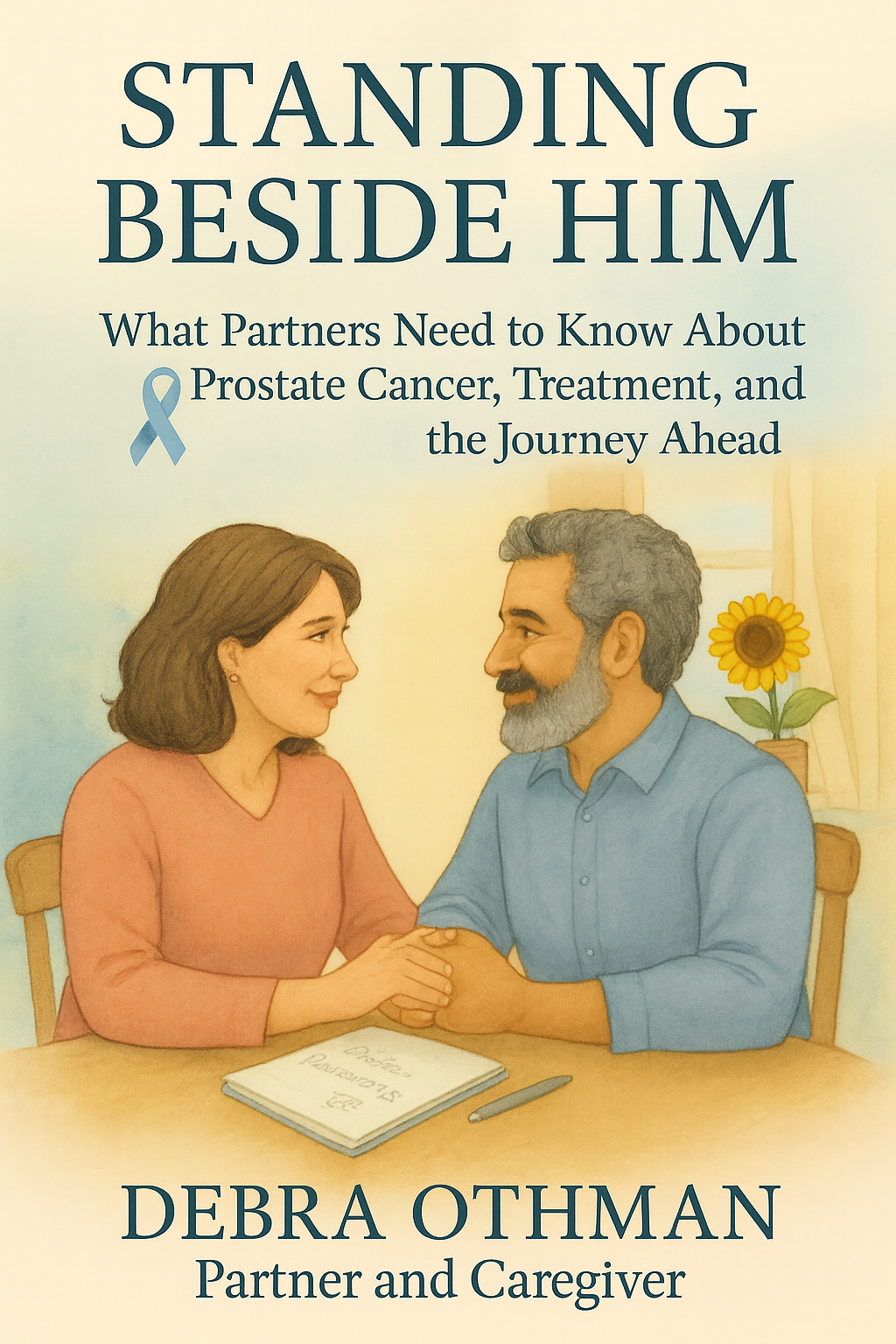
📘 Learn about Standing Beside Him
See the upcoming book →
🏡 Start Here
Return to caregiver resources and featured content →

Caregivers deserve reminders that come right to them.
🌻 Join my list for gentle caregiver updates and instant access to the Caregiver Tools Library.

✨ Don’t miss new updates. Share these tools with another caregiver and join the mailing list for gentle reminders.
