Lupron Mood Swings and Emotional Changes During ADT
Hormone therapy can affect more than the body—it can change mood, energy, and emotional connection in ways that feel confusing and unexpected. This guide helps partners and spouses understand what’s happening and how to respond with steadiness and care.
It is common for partners to feel like their husband’s personality has shifted after Androgen Deprivation Therapy (ADT) and radiation.
Many caregivers describe it this way: “He is still here, but he doesn’t feel like himself.”
When prostate cancer treatment begins, most conversations focus on survival, PSA levels, and radiation schedules. Far less attention is given to what happens inside the marriage.
ADT lowers testosterone to very low levels. Testosterone influences more than sexual function. It affects mood, motivation, patience, sleep, and cognitive sharpness. When levels drop suddenly, the emotional impact can be significant.
The changes you are seeing are often not intentional. They are usually the result of biological shifts combined with emotional strain.
Low testosterone can increase irritability and emotional sensitivity. Some men become tearful in ways that surprise them. Others become short-tempered or lose the drive they once had. Situations that once felt manageable may suddenly feel overwhelming.
Depressive symptoms can also emerge during ADT. This does not always look like classic depression. It may show up as withdrawal, loss of interest, hopelessness, or emotional flatness.
Some men experience cognitive fog. They may struggle with focus or feel less sharp than they once did. Even without chemotherapy, hormone therapy can affect executive function and memory. That frustration can spill into everyday interactions.
Fatigue adds another layer. Chronic exhaustion and disrupted sleep reduce patience and emotional resilience. When someone is depleted, their usual temperament can shift.
For the partner, this can feel like losing the man you knew — even while you are grateful he is receiving treatment.
I Have Been There
When my husband began radiation and ADT, I was unprepared for how quickly the emotional shift occurred. The affectionate, warm man I knew seemed to retreat almost overnight. I remember standing in the kitchen wondering where he had gone, even though he was physically present. I also remember feeling ashamed for missing him while he was still here.
Later, as I spoke with other women, I heard the same story again and again. The loneliness. The confusion. The sense that something sacred had changed.
If you are feeling that kind of loss, you are not imagining it.
Will Mood Swings Improve?
There is no single timeline.
Some men experience stronger emotional volatility in the early months of hormone therapy and gradually stabilize. Others continue to struggle throughout treatment and may benefit from additional medical or mental health support. Testosterone levels can take months to recover after ADT ends, and even then, emotional adjustment may take time.
If mood changes feel severe, prolonged, or unsafe, bring that to the oncology team’s attention. Emotional health is part of cancer care.
This article is not medical advice, but a reflection on patterns reported by couples during prostate cancer treatment.
Will He Go Back to Himself After ADT?
This is one of the most anxious questions caregivers ask.
In many cases, emotional side effects lessen after hormone therapy ends. But improvement is rarely immediate.
When ADT stops, the body gradually begins producing testosterone again. As hormone levels recover, mood stability, patience, and mental clarity often improve. As fatigue and hot flashes decrease, irritability may soften as well.
Recovery takes time.
For men on shorter courses of ADT, mood may begin improving within several months after the last injection. For longer-term treatment, it may take considerably longer for testosterone to reach levels that support emotional steadiness. In some older men, hormone levels may not return fully to their previous baseline.
That does not mean he will not feel better. It may mean the adjustment is gradual rather than dramatic.
It is also important to remember that not every emotional change is purely chemical. Fear of cancer, identity shifts, and anxiety about recurrence can continue even after treatment ends. As follow-up appointments become reassuring and daily life regains rhythm, emotional tension often eases.
If several months pass after treatment and mood remains significantly unstable, it is reasonable to ask the oncology team to review hormone levels and discuss options.
Improvement is common. Instant reversal is not.
When He Withdraws or Shuts You Out
Many men cope with fear privately. Crying alone, shutting down emotionally, or becoming irritable can be protective responses to vulnerability. That does not make the distance easier to live with.
You are allowed to say that this is affecting you too. Not as blame. Not as accusation. Simply as truth.
A relationship cannot remain steady if only one person’s emotional experience is acknowledged.
When He Refuses Counseling or Medication
One of the hardest realities caregivers face is seeing the emotional changes clearly while he refuses help.
He will not take medication.
He will not see a counselor.
He insists nothing is wrong.
You cannot force someone into emotional care.
But his refusal does not eliminate your right to support.
You are allowed to seek counseling for yourself even if he will not go.
You are allowed to build support outside the marriage during treatment.
You are allowed to say calmly, “I respect your decision, but I need support too.”
Sometimes resistance comes from pride. Sometimes from fear. Sometimes from exhaustion. You can invite help. You cannot carry both people alone.
If he refuses support, your work shifts to protecting your own stability.
When Mood Changes Cross a Line
Irritability and emotional swings can accompany hormone suppression.
But anger that becomes intimidating, verbally cruel, or emotionally unsafe is not something you are required to absorb.
Lower testosterone can influence mood. It does not remove responsibility for respectful behavior.
If conversations escalate, pause and say, “I want to talk, but not like this.”
If you feel emotionally unsafe, step away.
If behavior becomes threatening or physically unsafe, prioritize your safety and seek outside help.
Treatment may explain some changes. It does not excuse harm.
A Stronger View of Self-Care
Self-care during ADT and radiation is not indulgence. It is maintenance.
Protect your sleep.
Move your body regularly, even in small ways.
Stay connected to at least one grounded person who knows what you are living.
Limit how much emotional escalation you absorb in a single day.
Create one small daily ritual that belongs only to you.
This is not selfishness.
It is preservation.
If you disappear emotionally in order to keep the peace, the relationship loses both of you.
🌻 Tool & Resource Reminder
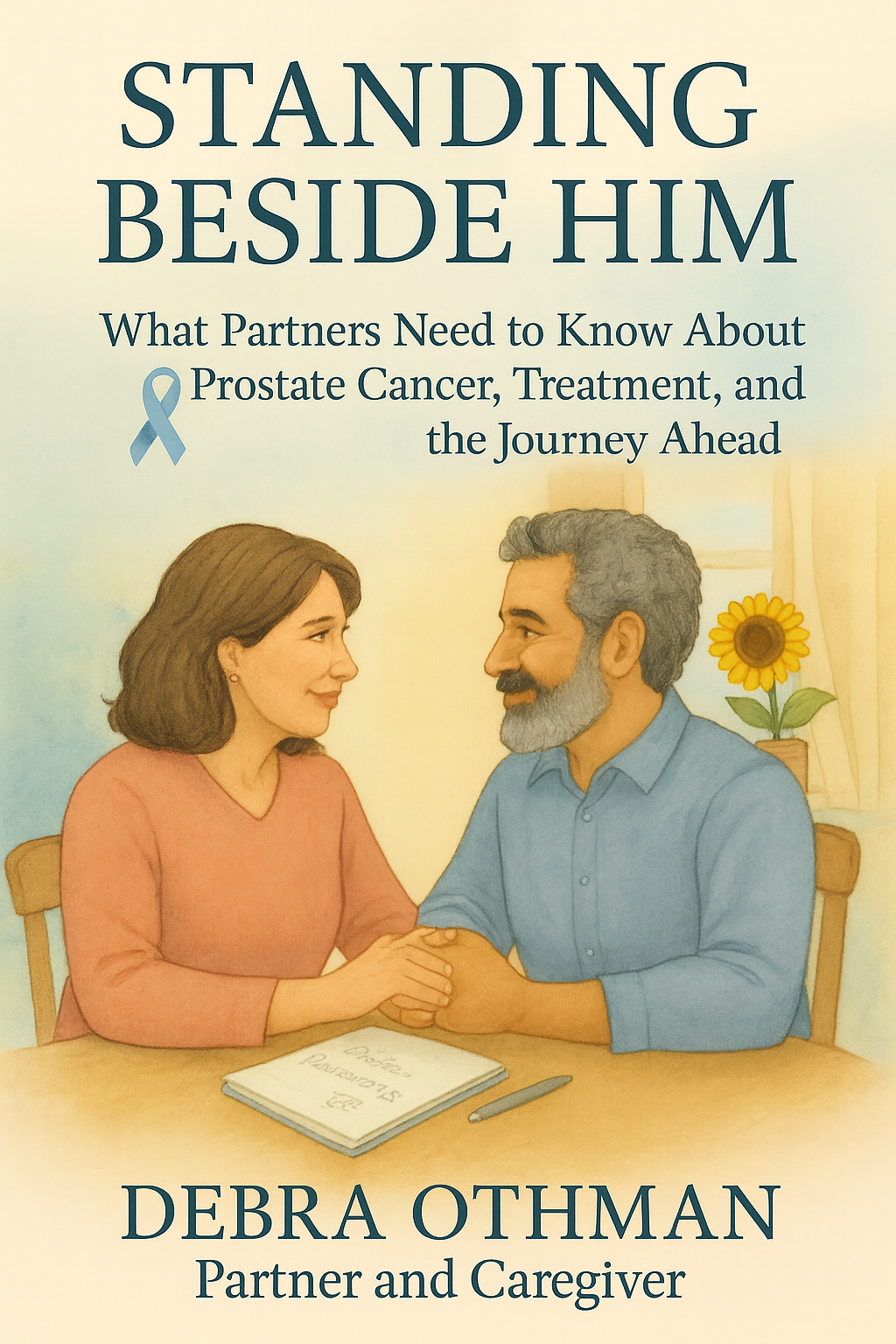
The Emotional Check-In Scale and Couples Communication Page are part of the Caregiver Binder framework inside Standing Beside Him. The full guide to navigating treatment, intimacy, and emotional strain will be available soon.
Holding Both Truths at Once
Prostate cancer treatment can change hormones, energy, and mood. It can also strain the quiet places in a marriage.
Both things can be true at the same time.
He may be struggling in ways he does not know how to name.
You may be hurting in ways you have been trying not to show.
This season does not have to define the rest of your relationship.
With awareness, steady boundaries, and support where needed, many couples find their footing again. Sometimes the connection looks different. Sometimes it grows deeper because both people learn to speak more honestly than they ever have before.
You are not wrong for missing who he was before treatment.
You are not wrong for needing care yourself.
And you are not alone in trying to hold both love and exhaustion at the same time.
Standing beside him does not mean standing without yourself.
🌻 Need practical support too?
👉 Enter the Tools Library